


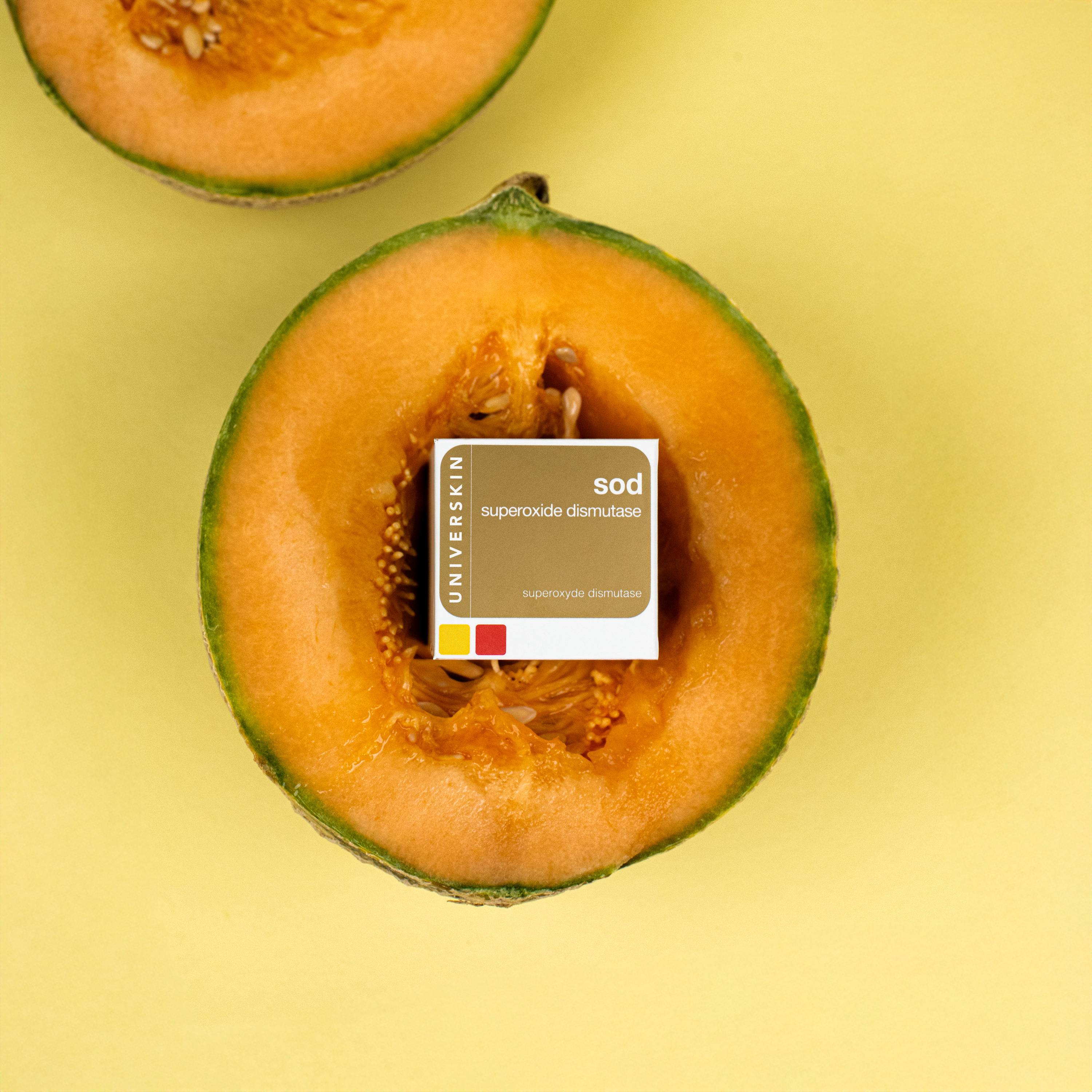
2% PER DOSE, UP TO 6%
SOD
SOD
Superoxide dismutase (SOD) is one of the most powerful antioxidants the body makes on its own. In skincare, a stabilized topical form defends the skin against free-radical damage, calms the look of redness, supports hydration and helps maintain a firmer, more even-looking complexion. Because it acts at the very first step of the antioxidant chain, it is often described as skin's first line of defence against oxidative stress.
Superoxide dismutases (SOD) are antioxidant enzymes that are naturally produced by the body. Among the primary antioxidants, they are considered the most potent, protecting cells from the damage caused by free radicals. Developed for cosmetic use, they are incorporated into skincare for their potent antioxidant properties and skin benefits. As noted by Nick Lane in his book Oxygen: The Molecule that Made the World (Oxford University Press, USA, 2003), the discovery and naming of superoxide dismutase activity is “… in the opinion of many, the most important discovery of modern biology never to win a Nobel prize.”
Concentration and Dosage
The active dose of SOD used in topical products varies widely with its source. At Universkin, we use a stabilized SOD dosed at 2% per capsule. Because your serum is built capsule by capsule, a doctor or your AI skin analysis can add up to three capsules of SOD, taking the concentration up to 6% for skin under heavier oxidative or environmental stress, while a gentler 2% suits everyday maintenance.
How to Use SOD
Who Should Use It
Topical SOD can benefit all skin types, including sensitive skin, but it is particularly useful for ageing or sun-damaged skin, dry and atopic-prone skin, and acne-prone skin, as well as for people affected by pollution and by internal or external stress. It helps protect the skin from free-radical damage and supports the overall health and appearance of the complexion.

Can Be Used In Combination With
SOD can be used in combination with other antioxidants, such as ferulic acid, vitamin C and vitamin E (vitamin C and E are both found in serum P), to enhance its effectiveness against oxidative-stress damage. It also pairs well with virtually all of our active ingredients, reinforcing their benefits to the skin.
How Often Can You Use It
SOD can be used daily, in the morning and/or the evening.
Don't Use It If
If you have very sensitive skin or known allergies, it is always recommended to test products on a small area of skin before applying them to the face.
Safety, Patch Testing and SPF
SOD is generally well tolerated and is not known to cause photosensitivity, but a few sensible habits help you get the most from it. Patch test any new formula on the inner forearm or behind the ear for a few days before facial use, and introduce it gradually if your skin is reactive. Apply it to clean skin after cleansing, then follow with your moisturiser. Because SOD is often used to counter UV- and pollution-related oxidative stress, it works best alongside a daily broad-spectrum SPF: sunscreen limits the free-radical load, while SOD helps neutralise what does form. If you notice persistent stinging, burning or increased redness, pause use and check with your doctor or dermatologist before resuming.
Origins and Composition
Origins of the Ingredient

Superoxide dismutases are found in a wide range of sources:
- In nature: SODs can be found in various microorganisms, including bacteria, yeast and algae.
- In the human body: SODs are found in various tissues, including the liver, heart and lungs, where they act as antioxidants, neutralising harmful superoxide radicals.
- In vegetables: certain fruits and vegetables, such as spinach, broccoli and melons, are rich in SODs.
SODs can also be produced industrially, including recombinant SOD from yeast, vegetable SOD extracts and marine-source SOD. Universkin has selected a stabilized, human recombinant SOD from yeast cultures for its high purity, efficiency and good stability in formulations.
Chemical Composition
Superoxide dismutase enzymes are metalloproteins, meaning they contain metal ions within their molecular structure. There are three main types of SOD in humans: Cu/Zn-SOD (SOD1), Mn-SOD (SOD2) and extracellular Cu/Zn-SOD (SOD3). Universkin SOD is slightly blueish in colour.

How SOD Works
Mechanism of Action
Superoxide dismutases play a crucial role in scavenging superoxide radicals in the body. They convert the superoxide radical into hydrogen peroxide (H2O2) and molecular oxygen (O2); the hydrogen peroxide is then broken down into water and oxygen by enzymes such as catalase. By neutralising superoxide radicals at this first step, SOD helps prevent oxidative damage to cellular components such as DNA, proteins and lipids. It may also support collagen production, improving firmness and reducing visible signs of ageing.
Skin Benefits
SOD improves the overall health and appearance of the skin by neutralising free radicals and protecting cells from environmental factors such as UV radiation and pollution. Through its powerful antioxidant action, it helps reduce visible redness, soothe the skin, soften wrinkles and fine lines, brighten skin tone and support hydration.
Stability
The stability of SOD depends on its origin. We use a stabilized SOD so that the antioxidant remains active within the formula and delivers consistent quality.
Evidence and Results Timeline
Superoxide dismutase is one of the most studied antioxidant enzymes in biology, and interest in its topical use has grown as researchers look for ways to counter oxidative stress in the skin. Published research has focused on three areas: protection against UV- and pollution-related free-radical damage, the calming of visible redness, and support for the skin's own antioxidant defences. Clinical and laboratory studies have shown antioxidant and soothing effects for topical SOD, which is why it features in products for reactive, sun-exposed and ageing skin. As with any active, results depend on the concentration, your routine and your individual skin.
A realistic idea of what to expect, assuming consistent daily use within a well-formulated serum:
- Weeks 1–2: skin often feels more comfortable and better protected through the day.
- Weeks 2–4: visible redness and reactivity linked to environmental stress tend to settle.
- Weeks 4–8: a brighter, more even-looking tone as antioxidant support is maintained.
- Weeks 8–12: firmness and fine-line benefits, which rely on slower collagen turnover, become more apparent.
These are general expectations rather than guarantees, and individual results vary.
SOD vs. Vitamin C and Other Antioxidants
Antioxidants are not interchangeable — they act at different points in the process that turns everyday exposure into visible damage. SOD works at the very first step, neutralising the superoxide radical before it can trigger a wider chain reaction, while vitamins C and E and plant antioxidants such as ferulic acid work further along. This is why they are so often combined rather than chosen one over another. The table below shows where SOD fits alongside the most common alternatives.
| Antioxidant | Best known for | Worth considering when |
|---|---|---|
| SOD (superoxide dismutase) | Neutralising superoxide radicals at the first step; calming redness and countering UV and pollution stress | Skin is reactive, sun-exposed, stressed or ageing early |
| Vitamin C | Brightening, evening tone and boosting daytime antioxidant defence | You want visible radiance and help fading dullness or marks |
| Ferulic acid | Stabilising and boosting other antioxidants, especially vitamins C and E | You are building a layered daytime antioxidant routine |
| Vitamin E | Protecting the skin's lipids and supporting a comfortable barrier | Skin feels dry, exposed or in need of extra comfort |
| Niacinamide | All-round barrier support, balancing oil and evening tone | You want a versatile, well-tolerated multitasker |
Because SOD works upstream of these antioxidants, pairing it with them gives broader protection than any single ingredient alone — which is exactly how a personalized formula is designed to work.
SOD in Your Personalized Formula
At Universkin, SOD is not sold as a fixed, off-the-shelf cream. It is dosed at 2% per capsule and added to a serum built specifically for your skin. Because the formula is modular, the concentration is buildable: a single 2% capsule for everyday antioxidant support, or up to three capsules (up to 6%) when your skin is under heavier UV, pollution or oxidative stress. Your AI skin analysis assesses your skin and determines whether SOD belongs in your formula and at what strength, and it can be combined with complementary actives in one serum.
You can explore ready-made options in the SOD-based serums and formulas collection, including the Super Antiox range such as Formula 4 Super Antiox for Sensitive Skin and Formula 6 Super Antiox for Dry & Dehydrated Skin. For a fully bespoke result, the personalized route tailors your dose and pairings to your skin.
The Bottom Line
In conclusion, SOD is a standout active: as the most potent primary antioxidant, it offers many benefits, from protecting against environmental damage and neutralising free radicals to improving the overall health and appearance of the complexion. Very effective on its own, it delivers even better results combined with other antioxidants and actives.
It's always important to consult a skincare professional or a dermatologist if you have any concerns about using SOD.
Frequently Asked Questions
What does SOD (superoxide dismutase) do for skin?
SOD is a powerful antioxidant enzyme. On the skin, it neutralises superoxide free radicals generated by UV light, pollution and everyday stress, acting at the very first step of the antioxidant chain. This helps protect cells from oxidative damage, calm redness and support hydration, and over time can help maintain a firmer, brighter, more even-looking complexion.
Is SOD safe for sensitive or acne-prone skin?
SOD is generally well tolerated and suitable for all skin types, including sensitive, atopic-prone and acne-prone skin, where its soothing, anti-oxidative-stress action can help. No ingredient suits everyone, though. If your skin is very reactive or you have a diagnosed condition, patch test first and check with your doctor or dermatologist before starting other active treatments.
What concentration of SOD is effective in skincare?
Effective doses vary with the source and stability of the SOD. At Universkin, SOD is dosed at 2% per capsule, and the formula can be built up to three capsules, taking it to 6% for skin under heavier oxidative stress. A lighter 2% suits daily maintenance, while higher strengths suit sun-exposed or reactive skin.
Can you use SOD together with vitamin C or niacinamide?
Yes. SOD pairs very well with vitamin C, vitamin E and niacinamide. Because SOD acts upstream of these antioxidants, combining them offers broader protection than any one alone, and in a Universkin serum they can be blended into a single personalized formula rather than layered as separate products.
Which Universkin formulas contain SOD?
SOD is a core antioxidant in our Super Antiox range, including Formula 4 Super Antiox for Sensitive Skin and Formula 6 Super Antiox for Dry & Dehydrated Skin. You can browse every option in the SOD-based serums and formulas collection, or have SOD dosed into a serum built for you through a personalized skin analysis.
Skin concerns this ingredient can help with
In a personalized formula, this active is commonly used to help target:


