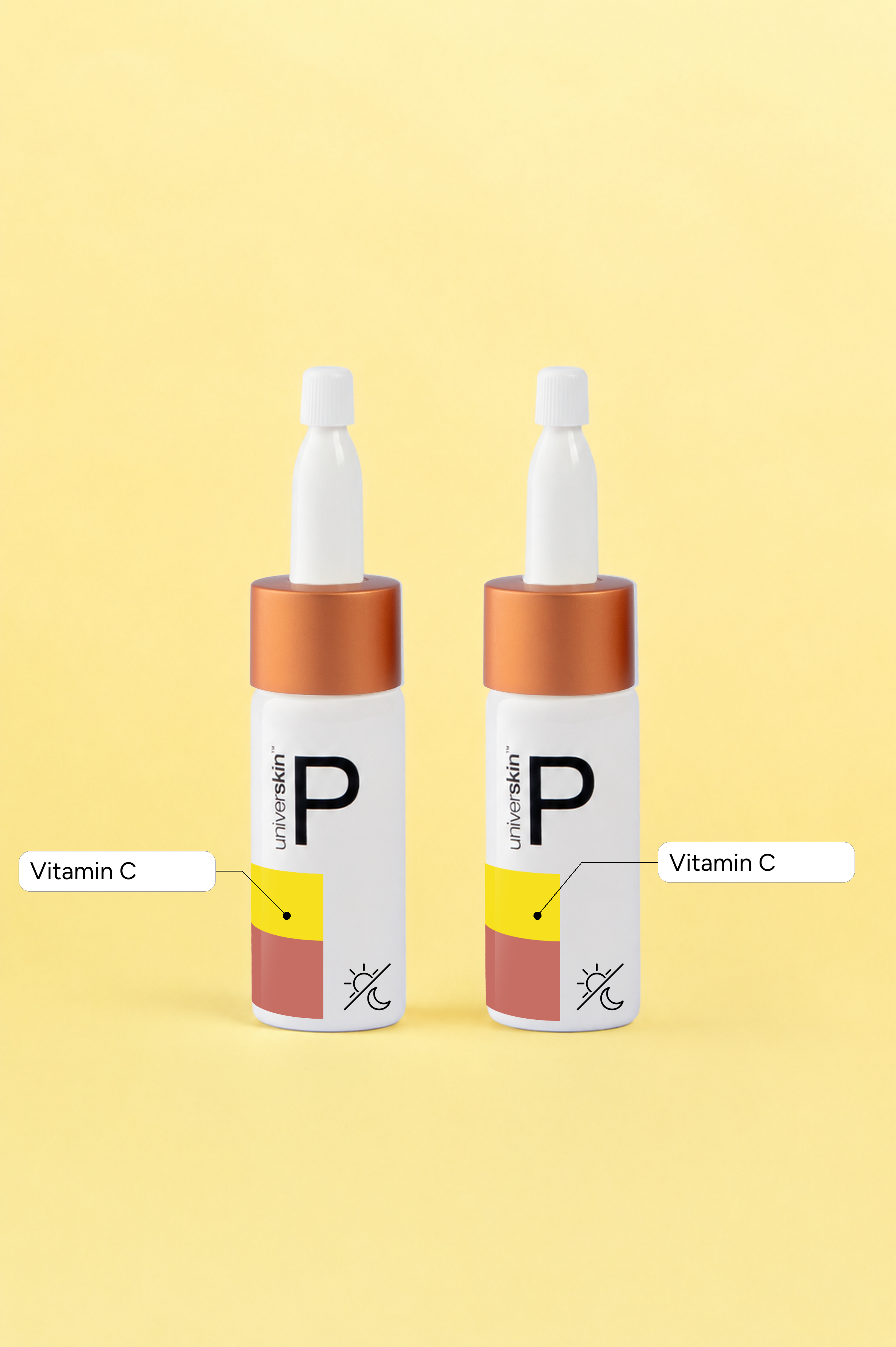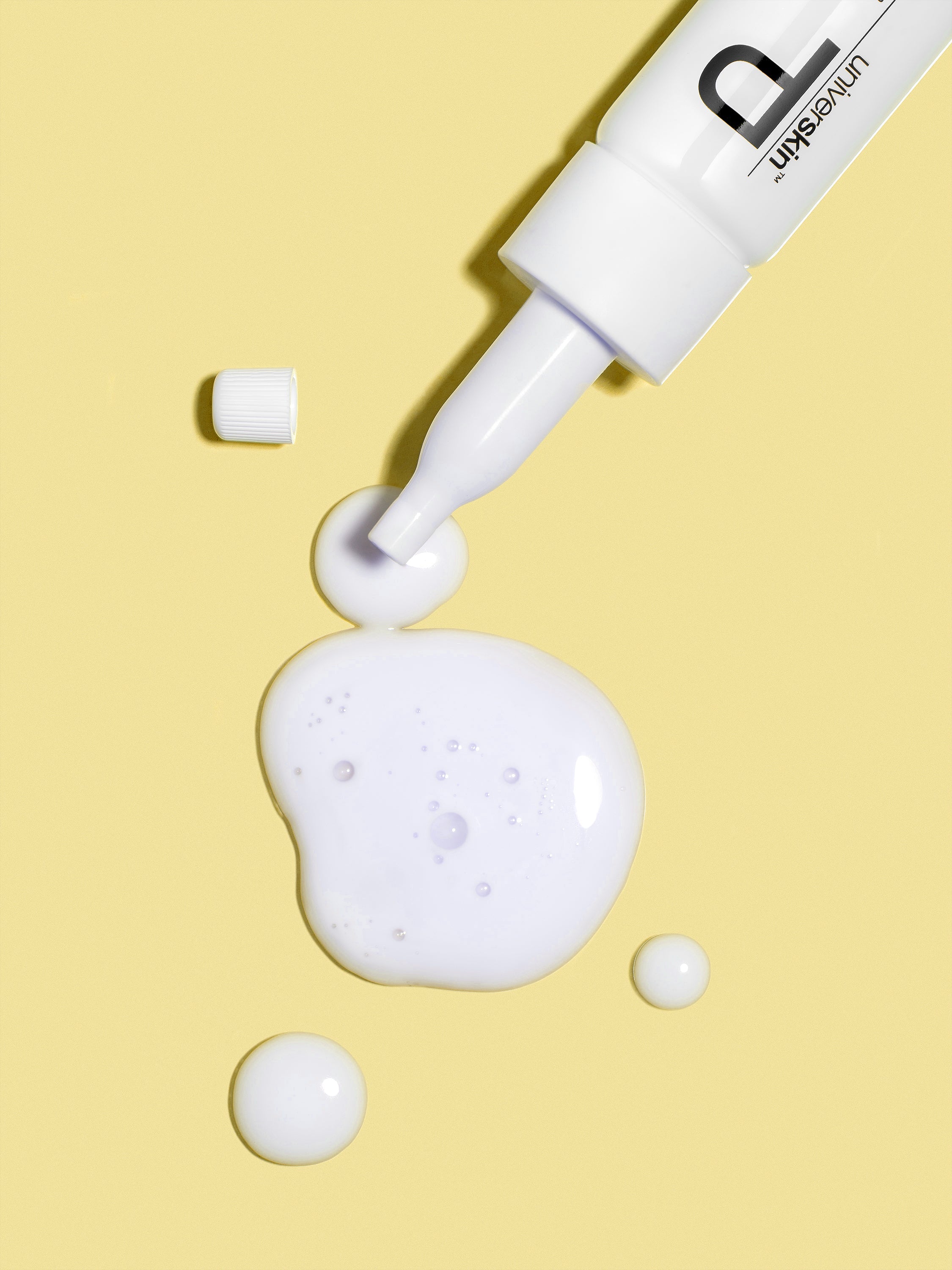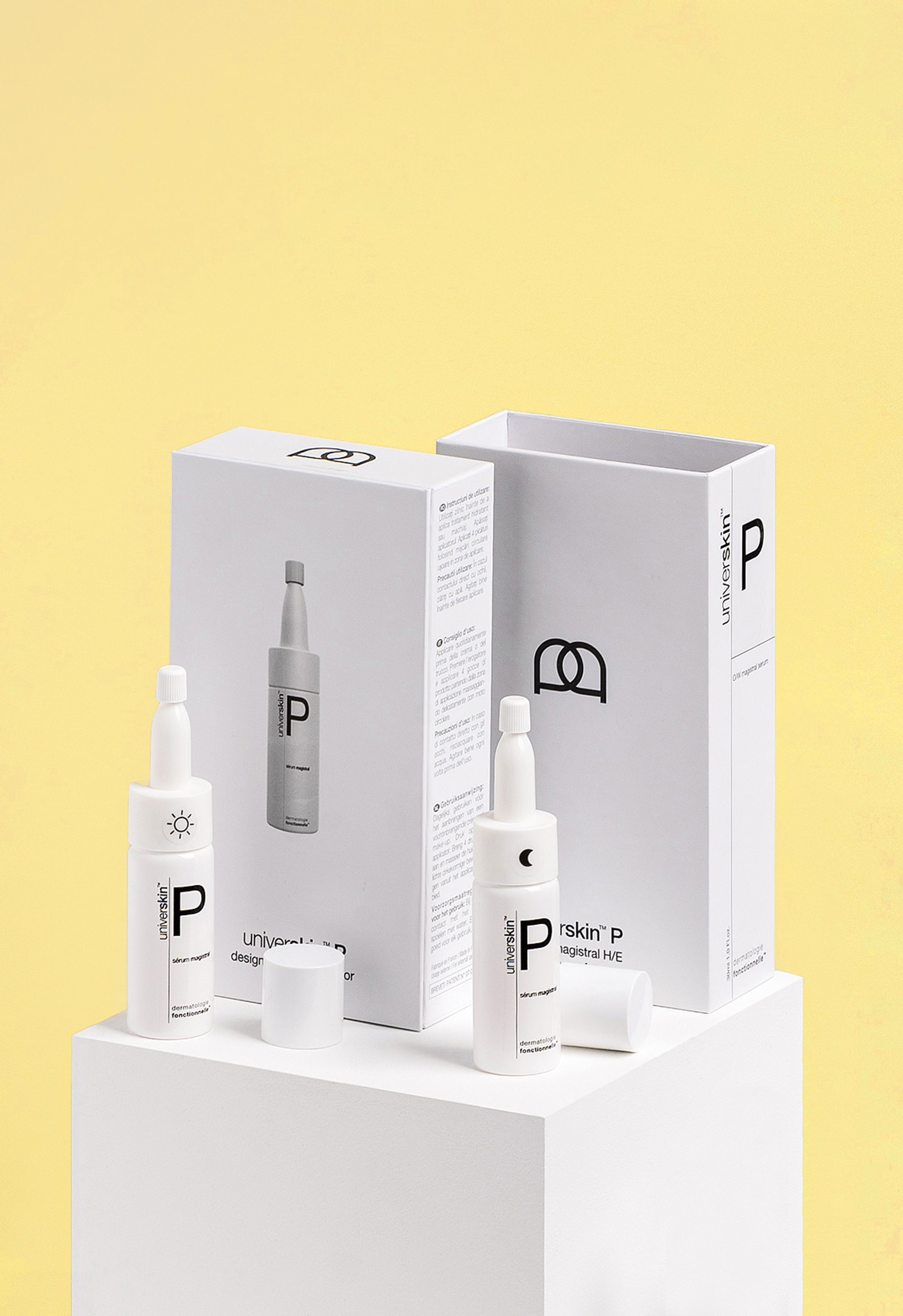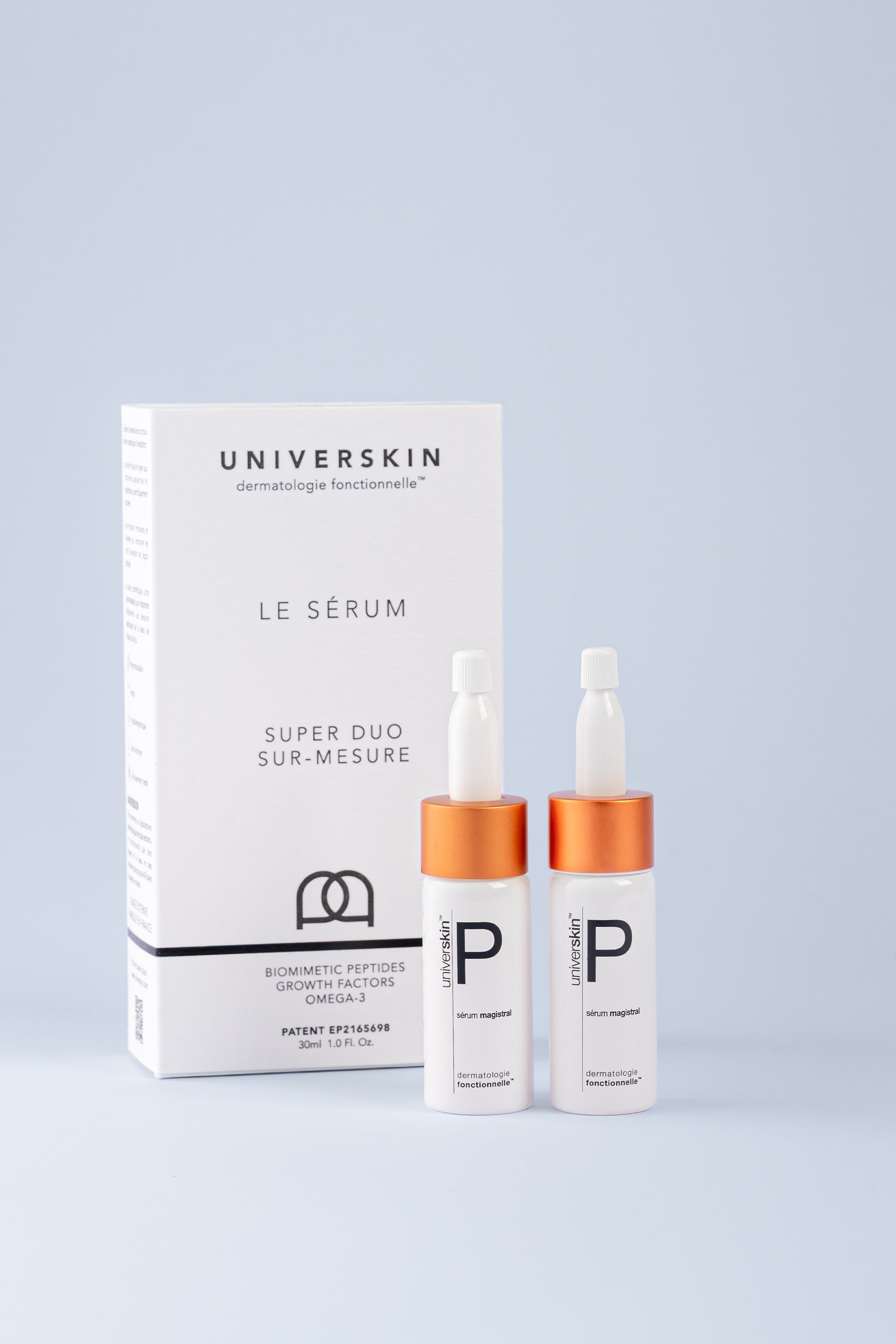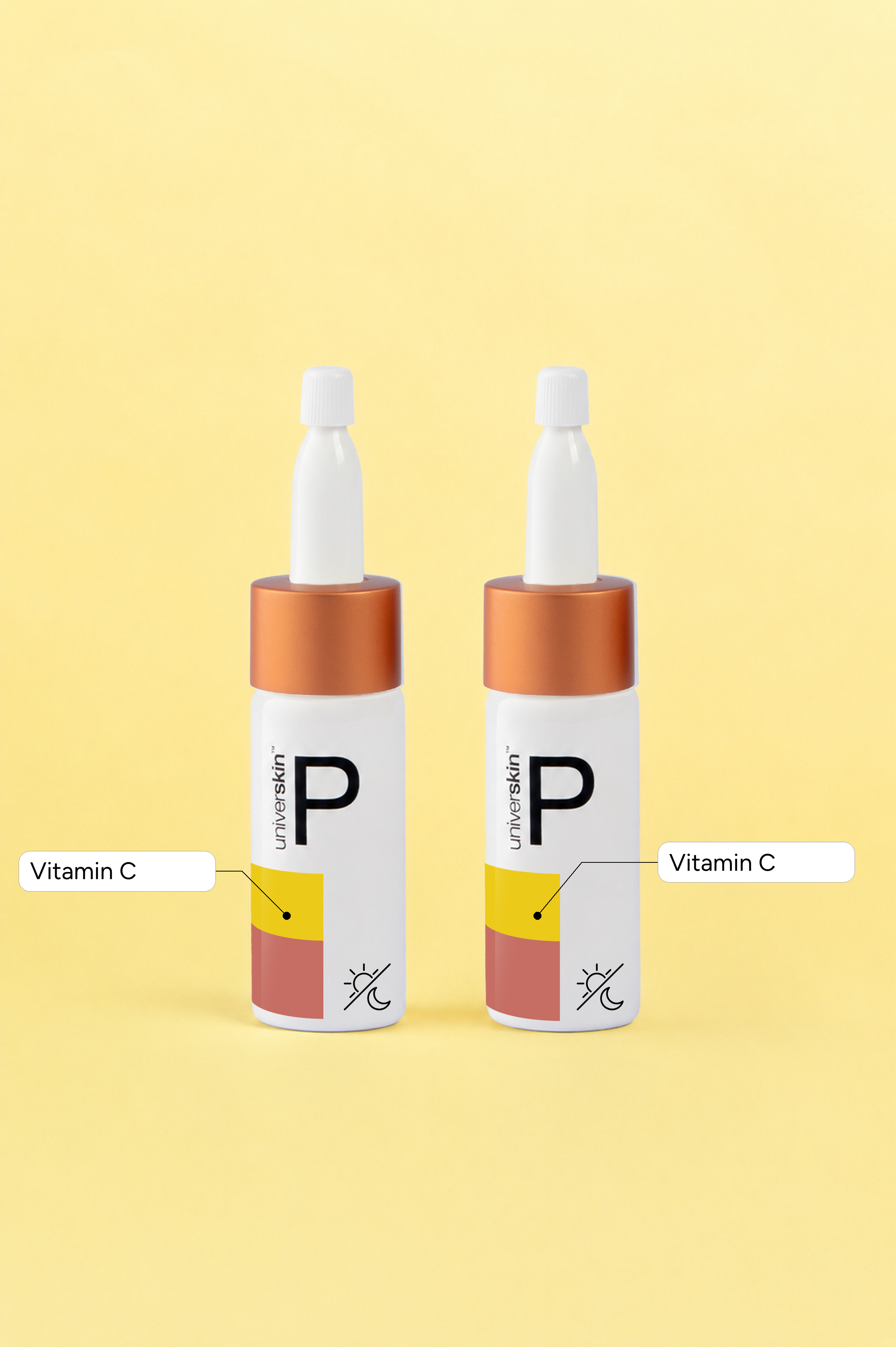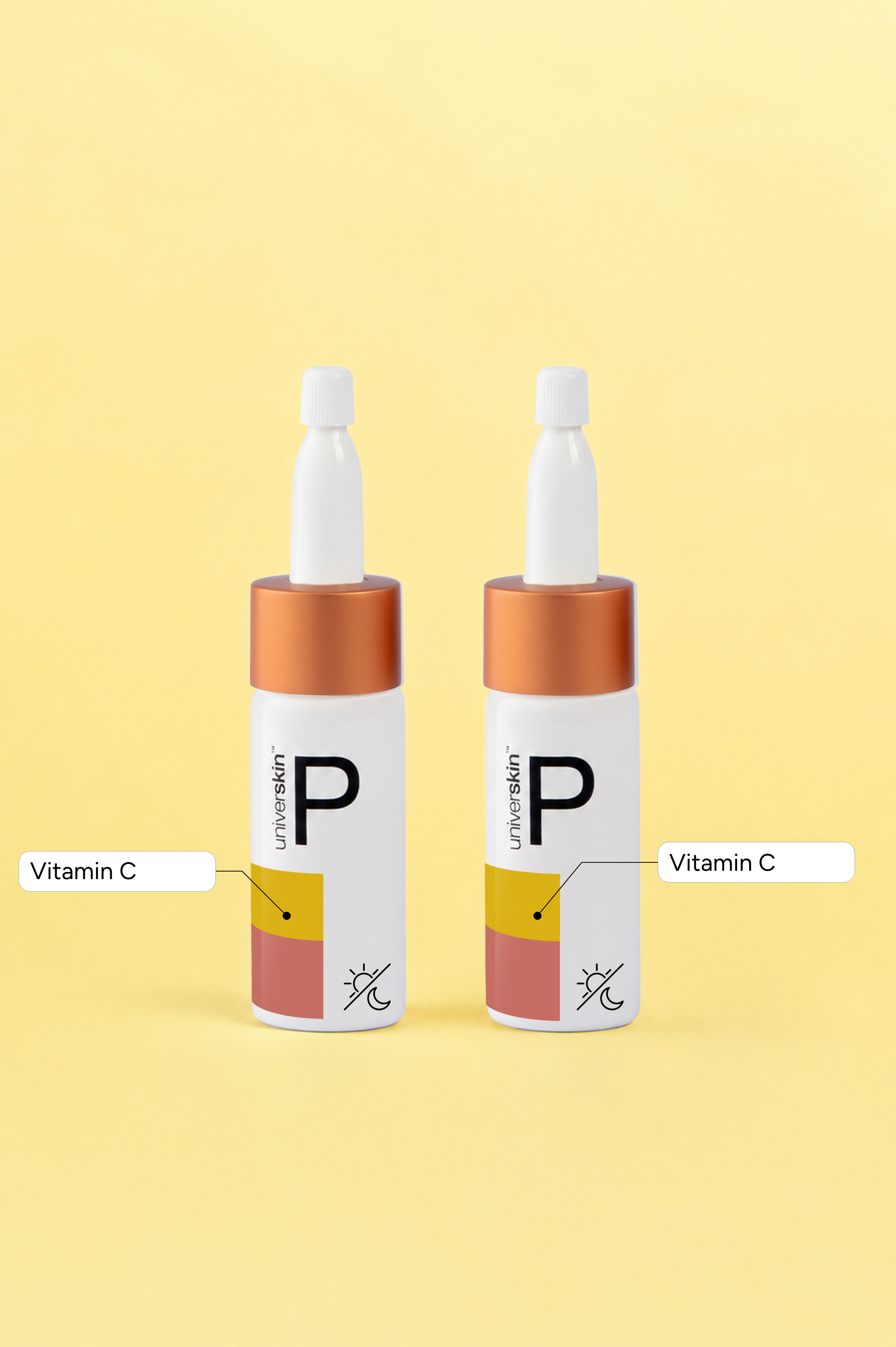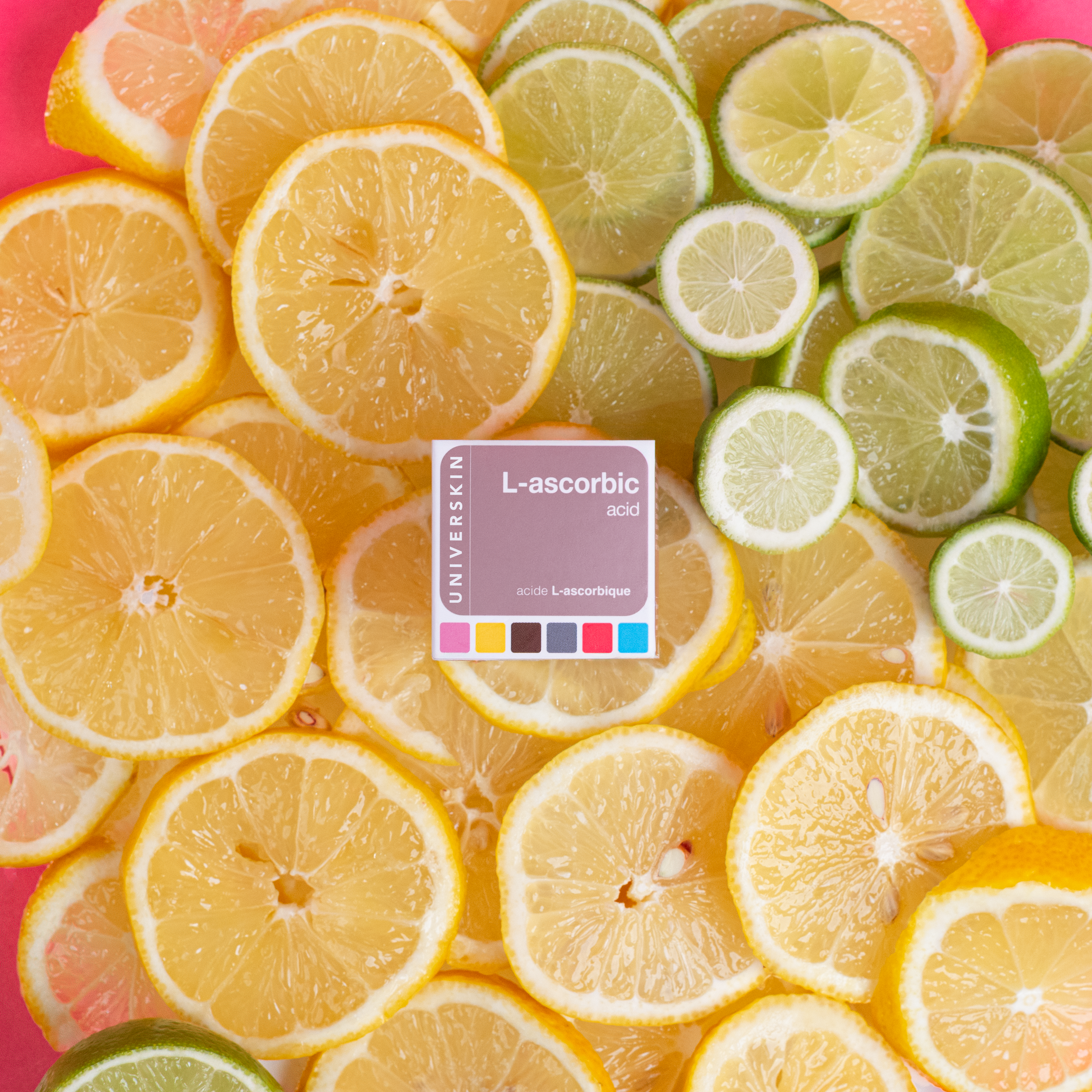
7% PER DOSE, UP TO 21%
VITAMIN C
VITAMIN C
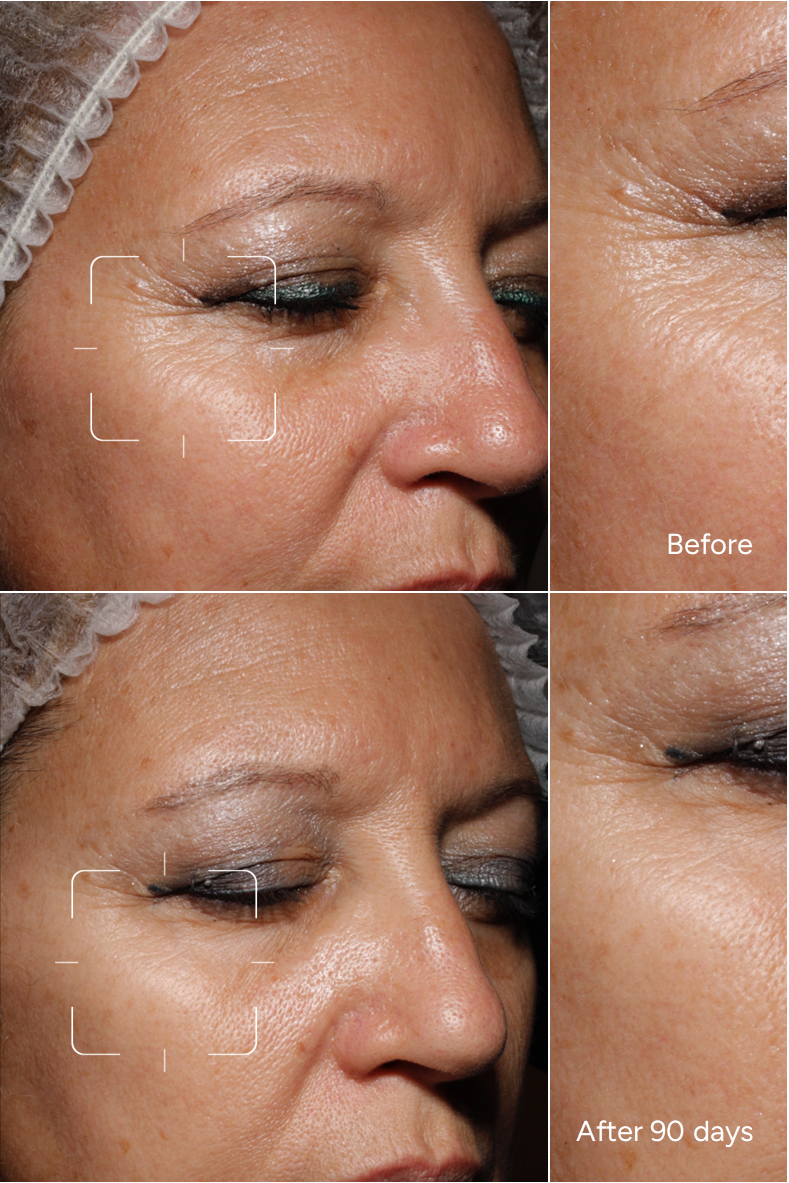
Known to scientists as L-ascorbic acid, vitamin C is essential to the human body: unlike most animals, we cannot synthesize it and must obtain it from our diet. A potent antioxidant and one of skincare's most popular actives, it is prized as a booster of firmness and elasticity, helps soften the look of fine lines and wrinkles, and brightens a dull, uneven complexion.
Concentration
In most cases, a product needs a vitamin C concentration above roughly 5% to be of real biological significance. Much depends on the formulation's ability to stabilize vitamin C, a notoriously unstable molecule. Rather than fixing a single strength in a mass-market bottle, Universkin offers pure vitamin C from 7% to 21%, dosed by your doctor and matched to your skin.
Who Should Use It
Almost everyone benefits from topical vitamin C, particularly to help boost firmness, reduce the look of hyperpigmentation, and give the skin a healthy glow. More broadly, it is a well-documented antioxidant that helps protect cells from the free radicals involved in many skin concerns and premature aging. Its gentler strengths suit even dull, tired or reactive skin.

Can Be Used In Combination With
Vitamin C works well alongside other antioxidants, such as vitamin E (contained in Universkin serum P), SOD and ferulic acid, which together strengthen its defence against UV damage and photoaging. It also pairs with actives that enhance its brightening and anti-aging effects, including niacinamide, isoflavones, arbutin and kojic acid for aging signs and dark spots. At Universkin these synergies are built into a single personalized serum.
How Often Can You Use It
Vitamin C can be used daily, in the morning and/or the evening. Many people prefer the morning, because its antioxidant action complements a broad-spectrum sunscreen, mopping up free radicals that slip past your SPF. It supports but never replaces sunscreen, so daily SPF is essential for its photoaging benefits. It is wise to trial vitamin C first, since some people experience temporary stinging, itching or dryness; dry or sensitive skin is best starting at the lowest strength, 7%.
Don't Use It If
If you have very sensitive skin or known allergies, patch test any new product on a small area and wait 24 to 48 hours before applying it to the face. It is generally recommended to separate vitamin C from retinol, exfoliating acids such as AHAs and BHAs, and anti-acne treatments, using them at different times of day to limit irritation. Introduce one new active at a time, and pause use if you notice persistent redness or stinging. If you are pregnant or breastfeeding or use prescription topicals, check with your doctor first.
Origins of the Ingredient

Kakadu plums hold the highest known concentration of vitamin C, while common dietary sources include acerola cherry, citrus, kiwi, red peppers and broccoli. Its history reaches back to the 16th century, when scurvy in sailors was traced to vitamin C deficiency. The first synthetic vitamin C was produced in 1933, and its use in skincare began in the 1970s.

Universkin uses a synthetic L-ascorbic acid to guarantee a consistent, high-purity active. We deliberately offer pure vitamin C rather than its derivatives (such as ascorbyl compounds), which are generally less bioavailable and less efficient on the skin.
Chemical Composition
Vitamin C is the generic name for L-ascorbic acid. Only the L-enantiomer of ascorbate is biologically active; its mirror-image D-form has no physiological significance. Its structure is related to glucose, and in its pure state it is a white, crystalline powder.

Mechanism of Action
Vitamin C is essential to collagen formation, one of the proteins that give skin its firmness. It is a required cofactor for the enzymes that build and stabilize collagen and helps protect existing collagen from breaking down. It is also a recognized depigmenting agent: it helps interrupt the pigment-forming enzyme tyrosinase and, as an antioxidant, curbs the free radicals that drive hyperpigmentation and premature aging.
Benefits
Vitamin C helps brighten the skin, even out tone, soften the look of fine lines and wrinkles, and improve the overall health of the complexion. By supporting collagen it can improve firmness and elasticity, and it is a key antioxidant defence against UV-related damage. It is not, however, a substitute for sunscreen and works best under a daily broad-spectrum SPF.
Evidence & Results Timeline
Vitamin C is one of the most studied cosmetic antioxidants. Its role in collagen synthesis is well established: it is a required cofactor for the enzymes that build stable collagen. For photoprotection, a study by Lin and colleagues, published in the Journal of the American Academy of Dermatology in 2003, reported that combining topical vitamin C with vitamin E provided significantly greater protection against UV-induced damage than either antioxidant alone, and adding ferulic acid helps stabilize this combination further. For tone, clinical studies have shown that topical vitamin C can help reduce the appearance of hyperpigmentation.
A realistic timeline for daily, well-formulated use looks roughly like this:
- Weeks 1–2: antioxidant protection begins immediately at a molecular level; visible change is minimal, though skin may look fresher.
- Weeks 3–6: with consistent use and daily sunscreen, dullness softens and the complexion often looks brighter and more even.
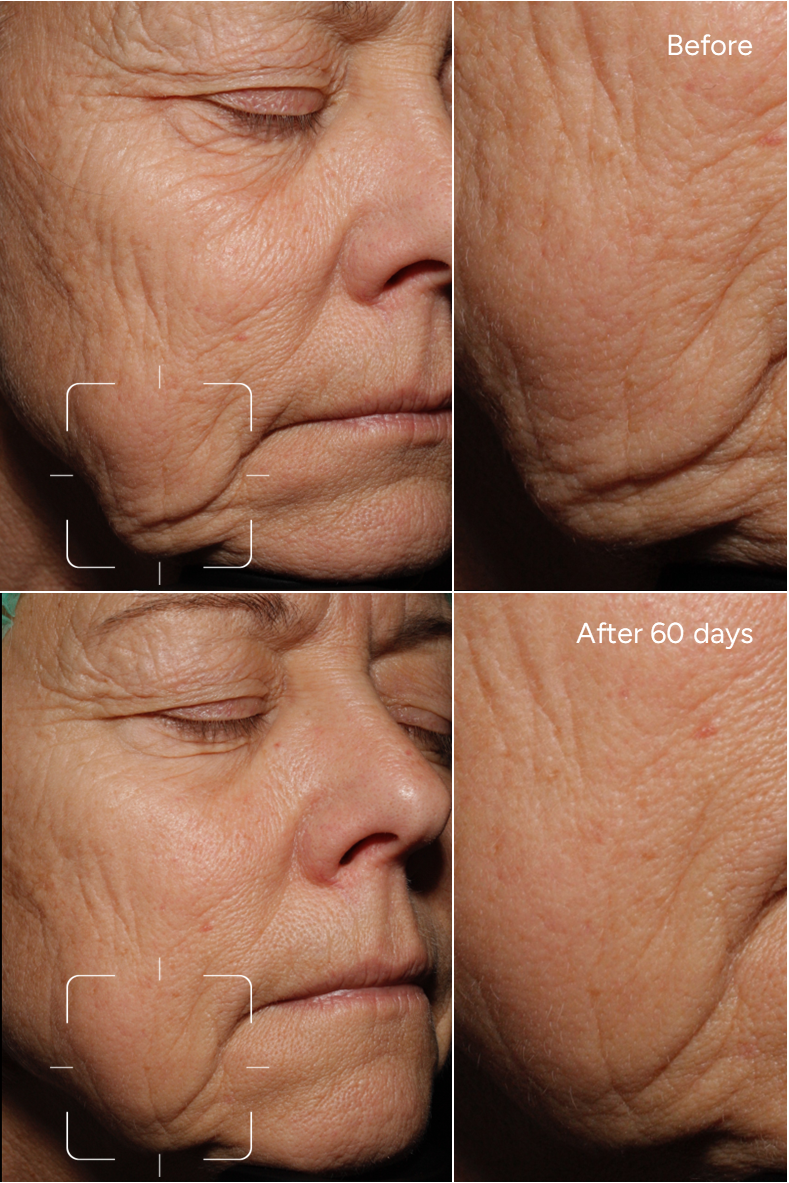
- Weeks 8–12: firmness and tone benefits become easier to see, and dark spots and fine lines may gradually improve.
- Beyond 12 weeks: the value is cumulative – vitamin C is best seen as a long-term daily defence, not a quick fix.
How Vitamin C Compares
Vitamin C works best in good company. Here is how it compares with the main alternatives.
| Ingredient | Main role | How it compares to vitamin C |
|---|---|---|
| Vitamin C (L-ascorbic acid) | Antioxidant, brightening, collagen support | Powerful all-rounder for glow and firmness; most effective but least stable, so freshness matters. |
| Vitamin C derivatives (ascorbyl) | Gentler, more stable brighteners | More shelf-stable but generally less potent and bioavailable than pure L-ascorbic acid. |
| Niacinamide | Barrier, tone, oil balance | Very well tolerated; a different mechanism that layers well with vitamin C rather than replacing it. |
| Arbutin | Targeted brightening | Gentler and more focused on pigment; pairs neatly with vitamin C for uneven tone. |
| Ferulic acid | Antioxidant stabilizer | Not a substitute; it stabilizes vitamin C and boosts its photoprotection. |
| Retinol | Cell turnover, wrinkles | Complementary evening active; usually best separated from vitamin C to limit irritation. |
Which Strength Is Right for You?
Because Universkin doses vitamin C by the capsule, the strength is matched to your skin type and experience. Each dose delivers 7% pure vitamin C, and your doctor can build up to 21%. As a general guide:
| Strength | Best suited to | Experience level | Explore |
|---|---|---|---|
| 7% | Dry, sensitive or reactive skin easing in gently | New to vitamin C | Formula 1 – Vitamin C 7% · Formula 54 (sensitive) |
| 14% | Most skin types wanting daily antioxidant and brightening support | Some experience | Formula 2 – Vitamin C 14% · Formula 5 · Formula 7 |
| 21% | Resilient skin targeting maximum firmness and radiance | Experienced, well tolerated | Formula 3 – Vitamin C 21% |
Not sure where to start? Your skin analysis and doctor will recommend the right level to begin.
Stability
Vitamin C is highly unstable and degrades when exposed to light, heat, air, humidity, copper and heavy metals. Off-the-shelf products rely on airtight, opaque packaging and chemical stabilizers, and even then potency fades once the bottle is opened. This is why vitamin C is the ideal candidate for a freshly prepared serum: adding the capsules to your base serum at the point of use avoids both heavy stabilizer systems and the irritation of a very low, acidic pH (stability requires a pH below about 4.0). Once blended into your Universkin serum, its potency is protected to the last drop.
Vitamin C in Your Personalized Formula
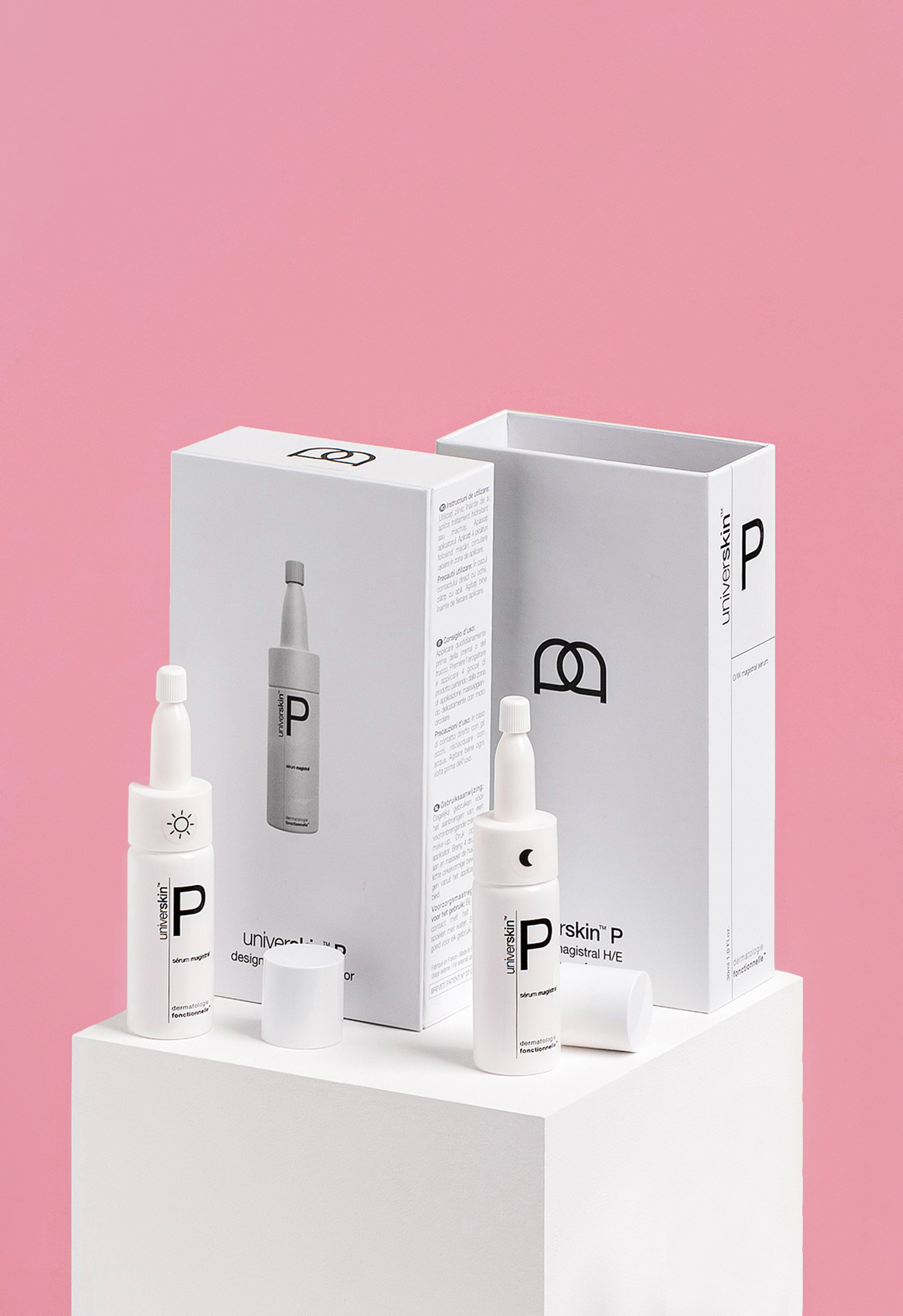
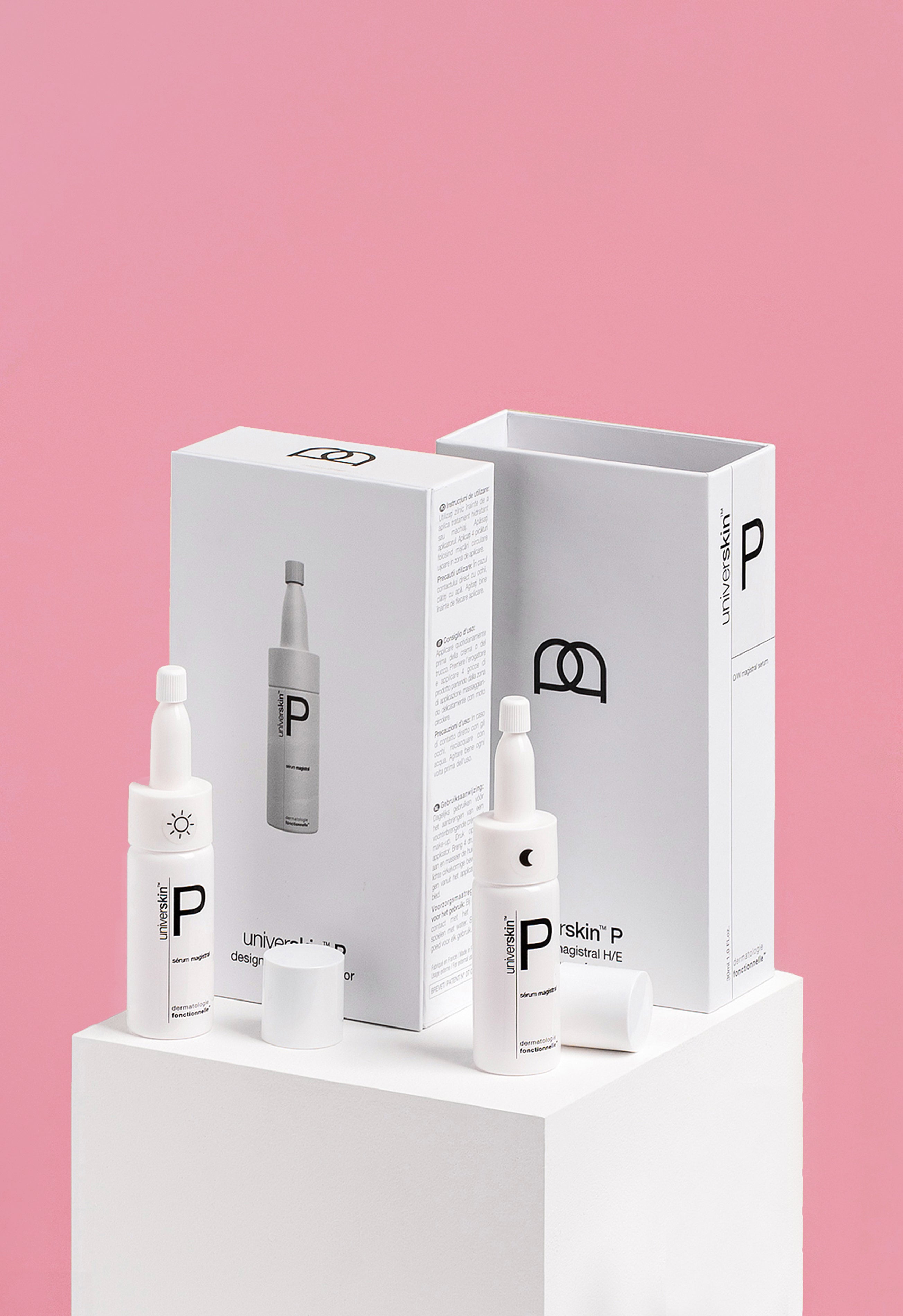
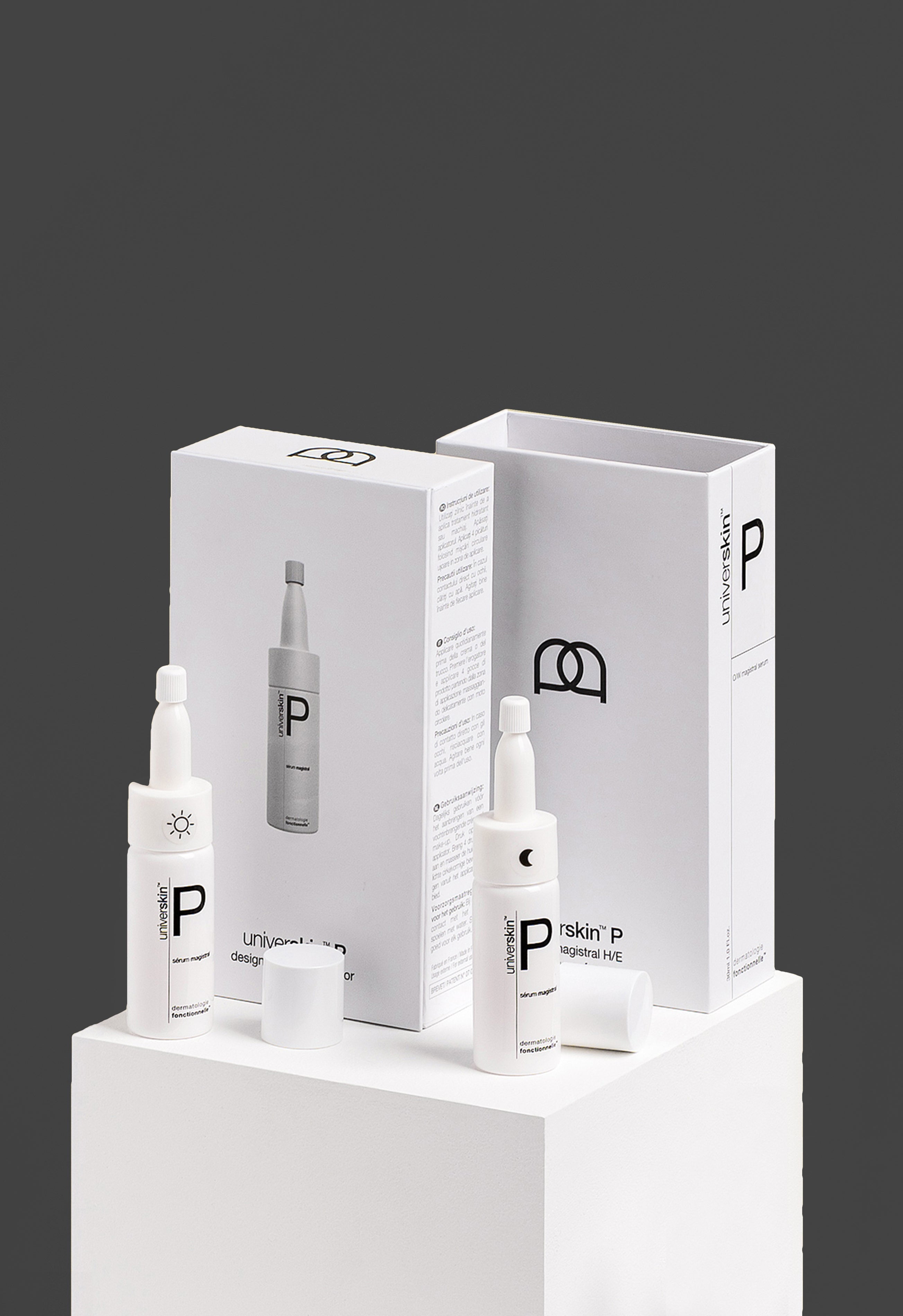
At Universkin, vitamin C is not sold as a fixed, pre-mixed serum. It is a buildable, three-capsule active: each dose delivers 7% pure L-ascorbic acid, and your prescribing doctor can build the concentration up to 21% to suit your skin. The capsules are blended into your personalized base serum only when your formula is made, so the vitamin C reaches your skin fresh and at full potency rather than degrading on a shelf. The process starts with your online skin analysis, which maps your concerns so vitamin C can be combined in one formula with actives such as ferulic acid, niacinamide or arbutin. Explore ready-designed options in the vitamin C collection, or target specific goals through our pigmentation, redness and antioxidant serums.
Frequently Asked Questions
What does vitamin C do for your skin?
Vitamin C is a potent antioxidant. It helps neutralize free radicals from UV light and pollution, supports the collagen that keeps skin firm, and helps brighten a dull, uneven complexion. Used daily under sunscreen, it can improve radiance and soften the look of fine lines and dark spots over time.
What percentage of vitamin C serum is best for my skin type?
Most formulas become meaningfully active above roughly 5%. Dry, sensitive or reactive skin is usually best starting at 7%; most skin types do well around 14%; and resilient skin targeting maximum firmness may suit 21%. At Universkin each capsule adds 7%, so a doctor can tailor the strength to you rather than guessing from a fixed bottle.
Can I use vitamin C with niacinamide or retinol?
Yes. Vitamin C and niacinamide are compatible and layer well to support tone, texture and antioxidant defence. Vitamin C and retinol are also complementary, but because both can be irritating, many people use vitamin C in the morning and retinol at night. Introduce one active at a time and start low.
Should I apply vitamin C serum in the morning or at night?
Either works, but many people apply vitamin C in the morning because its antioxidant action complements daytime sunscreen. Applied under a broad-spectrum SPF, it supports but never replaces sunscreen. If you also use retinol or exfoliating acids, keeping vitamin C for the morning and those actives for the evening can reduce irritation.
Why do vitamin C serums oxidize, and how does a freshly compounded serum stay stable?
Pure vitamin C is highly reactive and breaks down when exposed to light, heat, air and humidity, which is why many serums turn brown and lose potency after opening. Universkin keeps the vitamin C in a sealed capsule and blends it into your base serum only when your formula is made, so it reaches your skin fresh and stays effective to the last drop.
In conclusion, vitamin C is one of the key firmness boosters and antioxidants, offering many benefits for the skin, from softening fine lines, wrinkles and sagging to brightening the complexion.
It's always important to consult a skincare professional or a dermatologist if you have any concerns about using vitamin C.
Skin concerns this ingredient can help with
In a personalized formula, this active is commonly used to help target:
Featured collection
Vitamin C BASED SERUMS FORMULAS