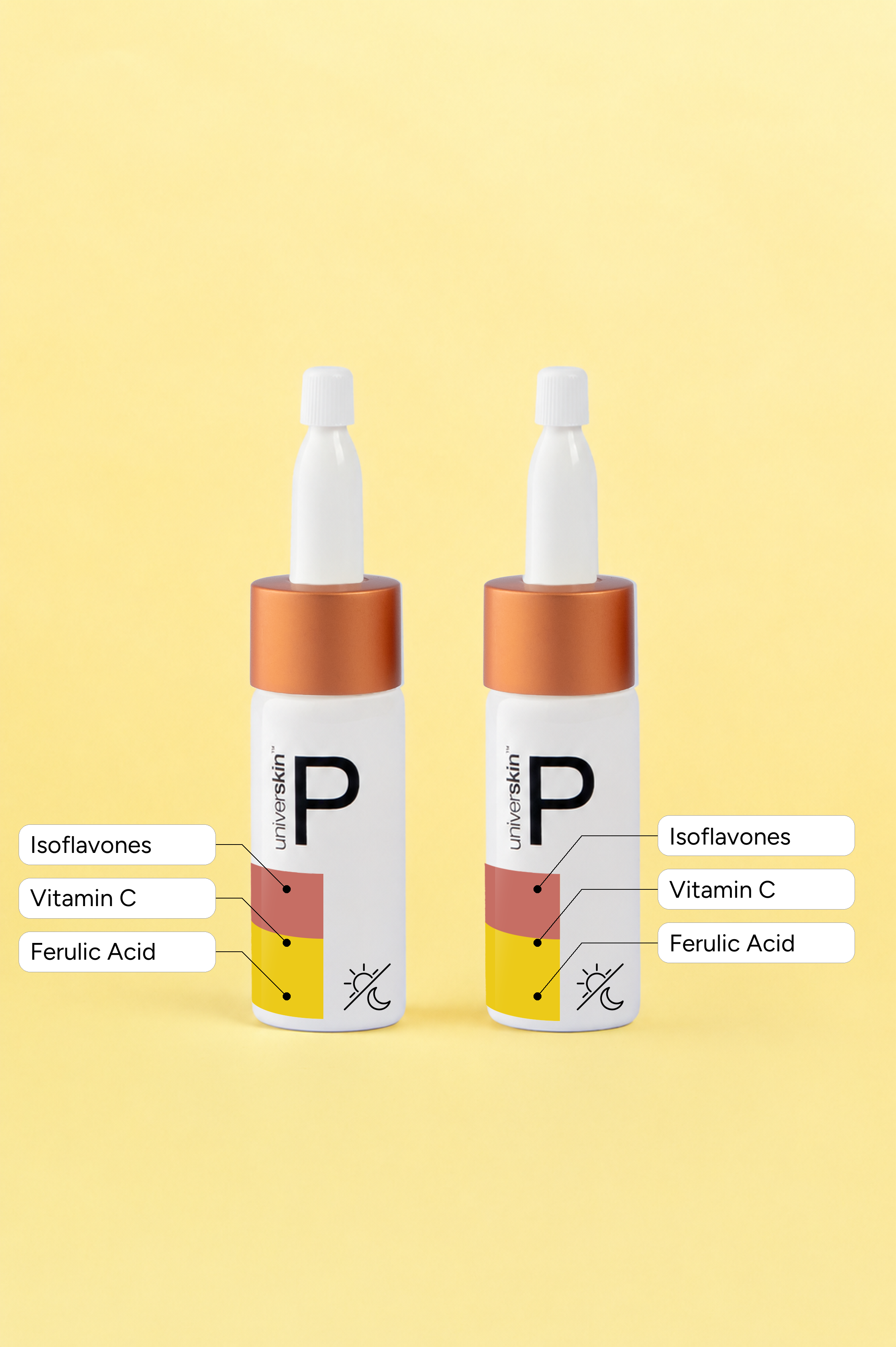
2% PER DOSE, UP TO 4%
ISOFLAVONES
ISOFLAVONES
Isoflavones are a type of phytoestrogen — plant-derived compounds whose molecular structure closely resembles the estrogen produced by the human body. Because of this resemblance, they have been studied extensively for their ability to help safely counteract certain signs of skin change associated with menopause, as the skin’s natural estrogen support declines.
Isoflavones are considered safe for topical use and are widely available as a skincare ingredient. They are not, however, suitable for everyone: people who are pregnant or breastfeeding should avoid them, as should anyone with a history of a hormone-dependent cancer. As with any active, they are best introduced under the guidance of a doctor.
Menopause and Your Skin
The years around perimenopause and menopause bring a steady fall in estrogen, and skin feels it directly. Estrogen helps maintain collagen, elastin, hydration and the pace at which skin repairs itself, so as it declines the complexion often becomes less firm, drier and duller, with fine lines that deepen faster and dark spots that grow more visible. Research on postmenopausal skin has reported a significant loss of dermal collagen in the years immediately after menopause, which is why familiar products can suddenly feel as though they no longer keep up.
Rather than adding hormones, isoflavones gently engage those same under-stimulated receptors — which is why they have become such a widely searched answer to menopause-related firmness, tone and radiance concerns.
Concentration
The ideal concentration of isoflavones depends on the formulation, the purity of the isoflavones used, the quantity of active molecules they contain and the result you are aiming for. Universkin uses titrated soy isoflavones dosed from 2% up to 4%, so the strength can be matched to your skin’s needs rather than fixed at a single, one-size-fits-all level.
Who Should Use It
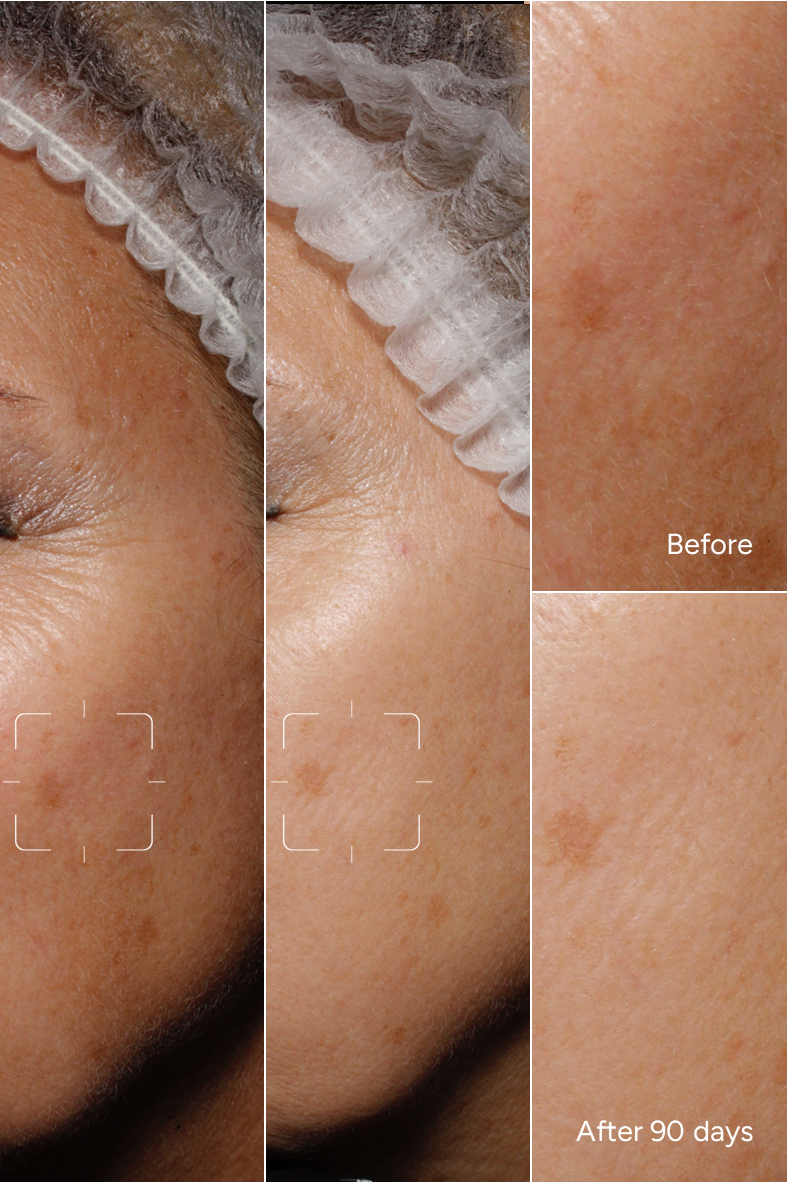
Isoflavones are particularly well suited to mature skin looking to firm and brighten the complexion, helping address loss of volume and elasticity, marked fine lines and wrinkles, age-related pigment spots and a general lack of luminosity — the cluster of changes most often linked to falling estrogen. You will find isoflavones at the heart of several doctor-designed serums — for lifting and firmness in Formula 15 – Sag No More and for age-related dark spots in Formula 45 – Age Spot Eraser — or explore the complete isoflavones-based serums collection.

Can Be Used In Combination With
Isoflavones pair well with many popular actives, including vitamin C, DMAE, niacinamide, SOD and ferulic acid. In the evening they sit alongside a retinoid such as retinol, and where pigmentation is stubborn they can be teamed with dedicated brighteners such as arbutin. Introduce one new active at a time, allowing a couple of weeks between additions so you can tell how each one suits you.
How Often Can You Use It
Isoflavones can be used daily, morning and/or evening. Because part of their appeal is a brighter, more even tone, daytime use should always be finished with a broad-spectrum sunscreen: brightening actives leave skin more reactive to UV, and sun exposure is the biggest driver of the age-related dark spots isoflavones work to soften. A steady daily routine matters more than an occasional high dose.
Don’t Use It If
Isoflavones should not be used by anyone who is pregnant or breastfeeding, or by those with a history of a hormone-dependent cancer, because they act as phytoestrogens. If you have very sensitive or allergy-prone skin, patch test on a small area — the inner forearm or behind the ear — for a few days before applying to the face. Pause use if you notice persistent redness, stinging or irritation, and speak to your doctor before resuming.
Origins of the Ingredient

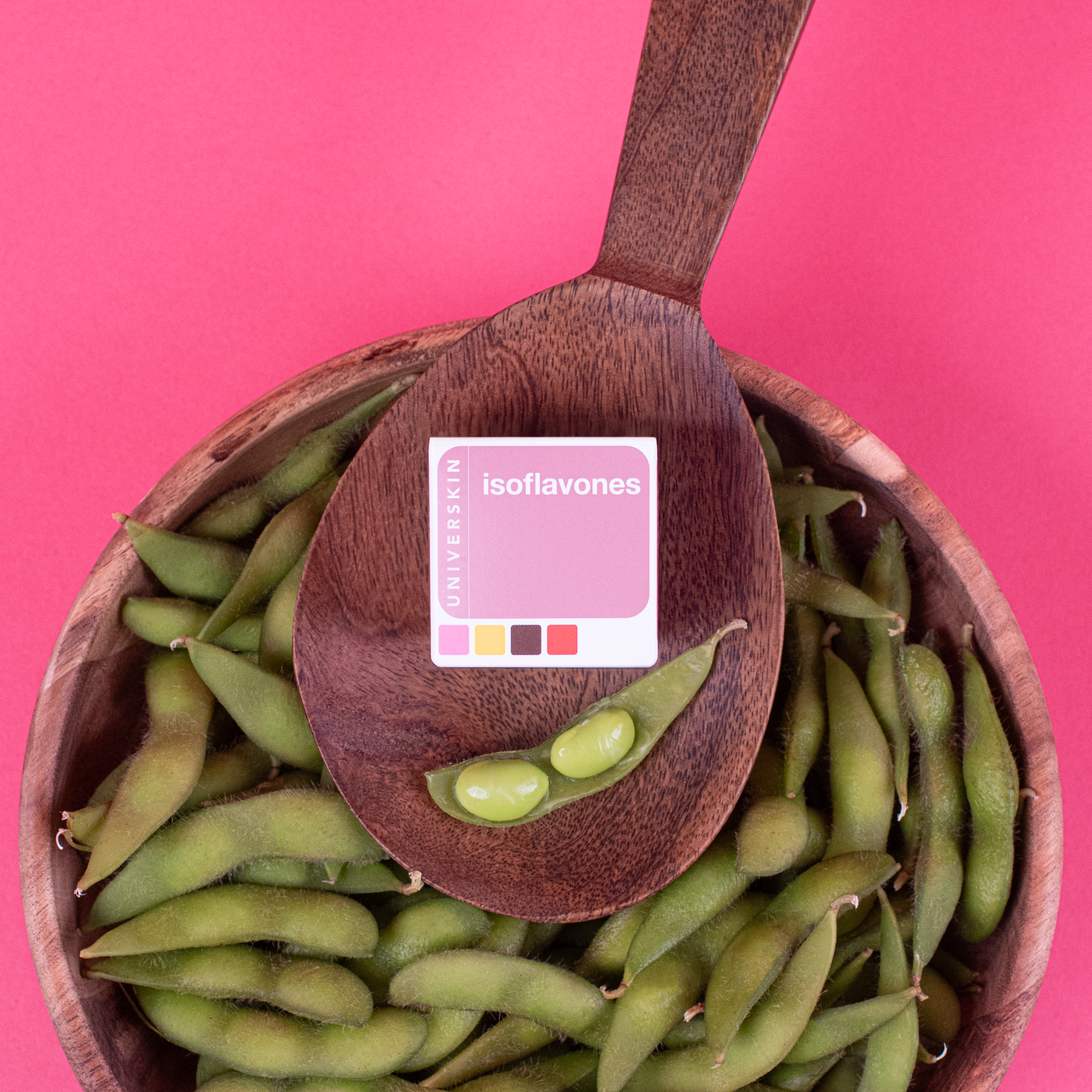
Isoflavones are phytoestrogens: plant compounds that resemble estrogens and can have estrogenic effects. They are found in high concentrations in soy products and other legumes. Universkin uses titrated soy isoflavones of high quality with a known, measured quantity of active molecules, so every dose is consistent.
Chemical Composition
Soy isoflavones are a group of phytoestrogens within the isoflavone class of flavonoids, and their chemical composition includes five major compounds: genistein, daidzein, glycitein, biochanin A and formononetin. Genistein and daidzein are the two most abundant, and the most studied for skin. In raw form the ingredient is a tan powder with a characteristic odour.

Mechanism of Action
Isoflavones act on the skin by supporting the production of collagen, elastin and other components essential to firmness and elasticity. They also help protect the skin from oxidative stress and even out skin tone by reducing age-related pigment spots. Much of this activity is attributed to their interaction with skin estrogen receptors, combined with a genuine antioxidant capacity.
Benefits
Isoflavones offer a wide range of benefits for mature skin: they firm and brighten the complexion, reduce the appearance of fine lines and wrinkles, and even out skin tone by softening age-related pigment spots. They also hydrate and nourish, helping restore a youthful glow and radiance.
Evidence & Results Timeline
Isoflavones are among the better-studied phytoestrogens in skin science. Their two main soy compounds, genistein and daidzein, have been investigated in laboratory and clinical research for their antioxidant activity and for the way they interact with estrogen receptors in the skin — the same receptors that fall quiet after menopause. Clinical studies have shown that isoflavones can be associated with improvements in firmness, elasticity and hydration in postmenopausal skin, and laboratory work has explored their role in supporting collagen. Because studies differ in design and dose, this is best read as a consistent body of supportive evidence rather than a single guaranteed outcome — which is why the strength of isoflavones in a Universkin serum is set by your doctor, not fixed in advance.
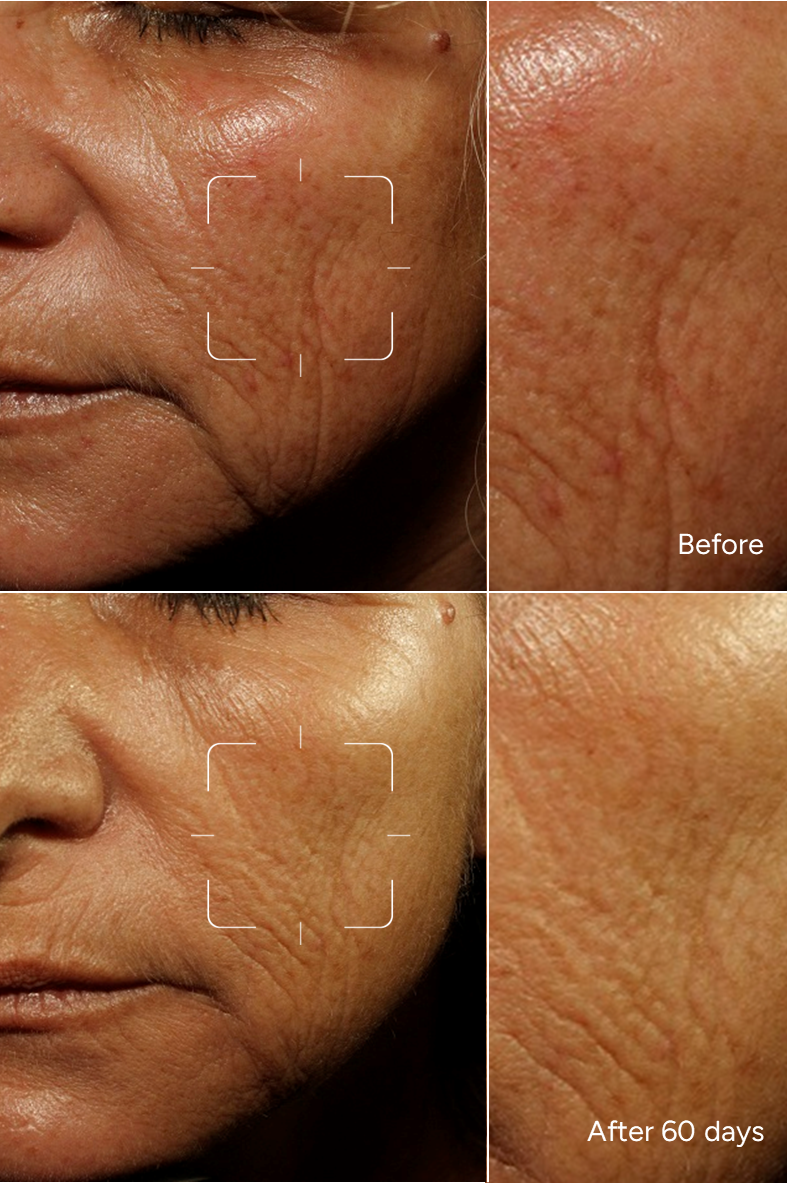
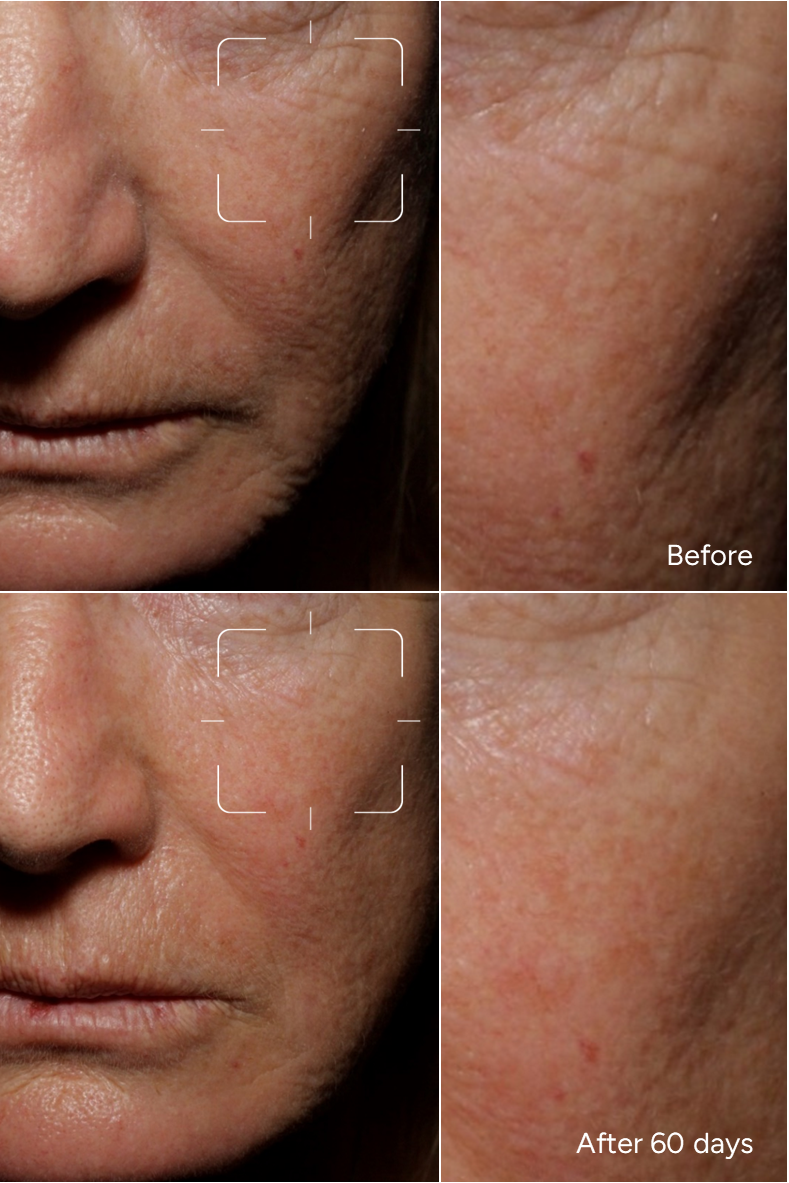
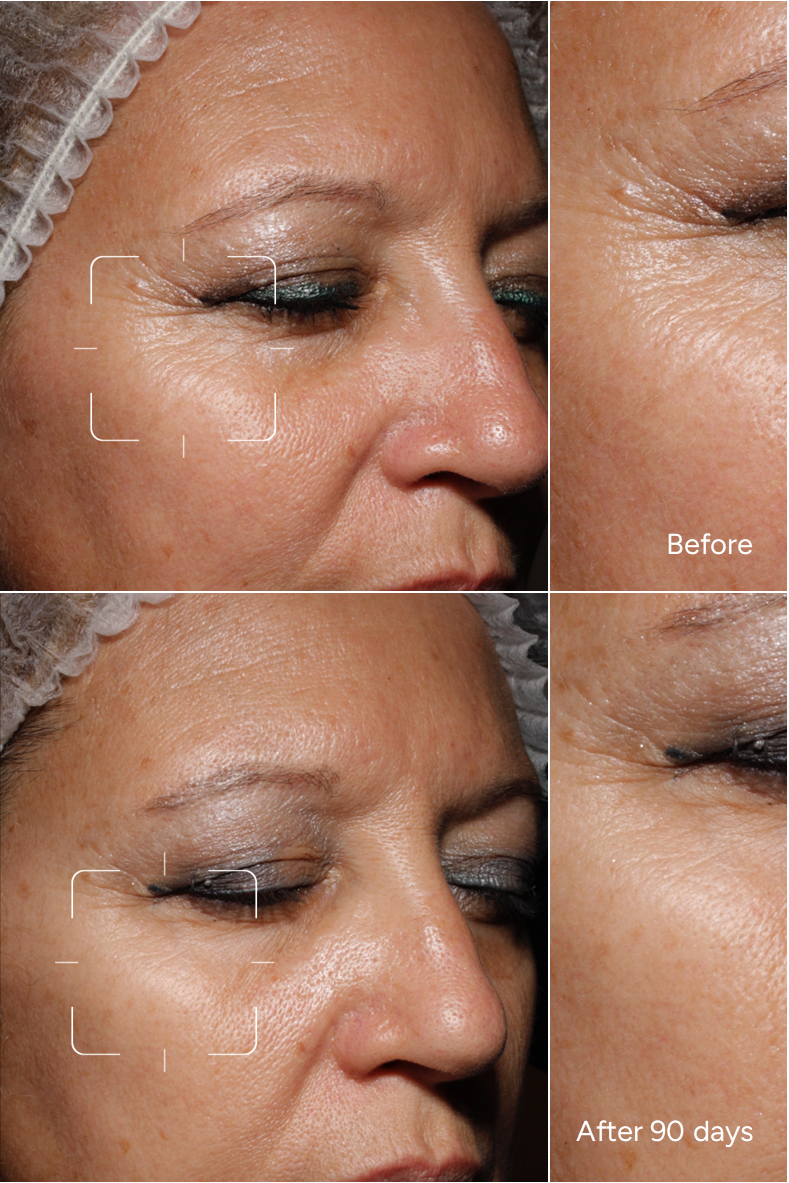
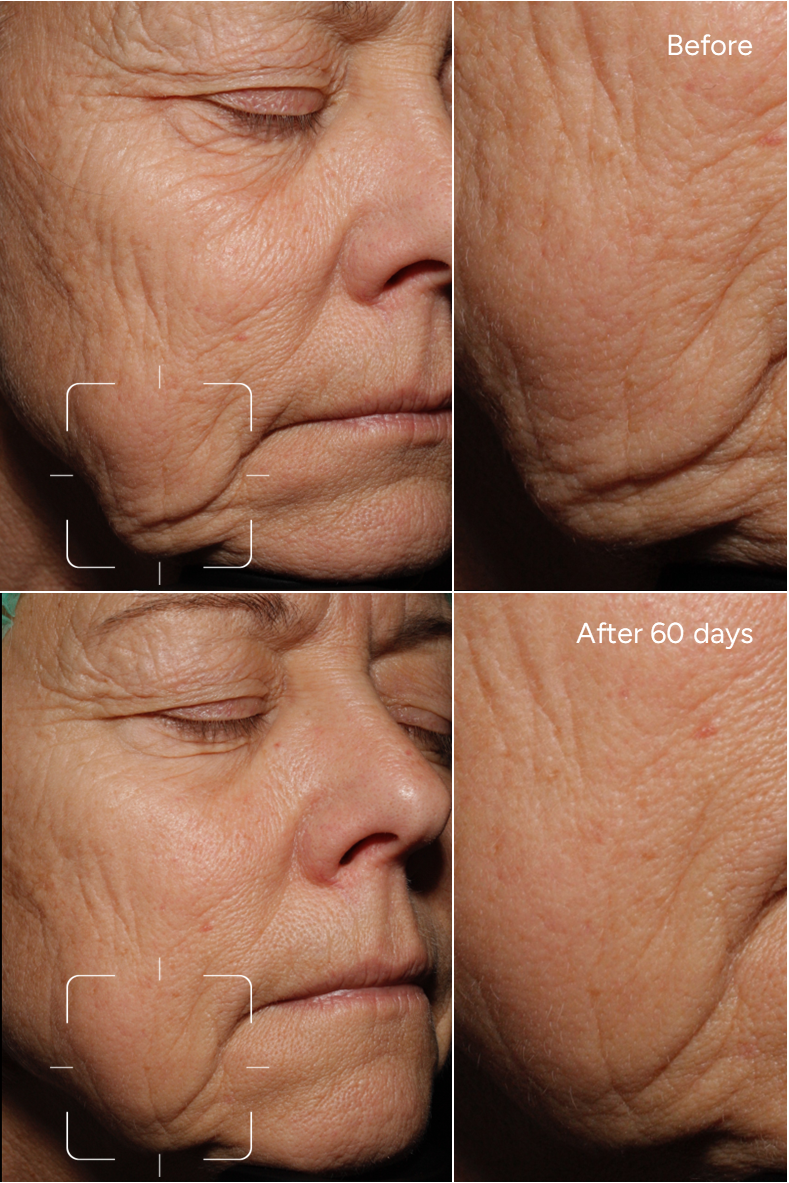
Results build gradually. In the first 2 to 4 weeks, most people notice the antioxidant and hydrating side of isoflavones first: skin that feels more comfortable, smoother and slightly more luminous. Between weeks 4 and 8, tone tends to look more even as the surface renews. Firming and elasticity are the slowest to appear, because they depend on the skin’s own remodeling cycle — expect the most noticeable change in firmness, and in age-related dark spots, from around 8 to 12 weeks of consistent daily use. Patience and consistency matter more than intensity.
How Isoflavones Compare
Isoflavones are not the only route to firmer, brighter mature skin, but they hold a distinctive place: they address the hormonal side of the change, not only the surface. Here is how they compare with common alternatives.
| Active | Best known for | How it works | Good to know |
|---|---|---|---|
| Isoflavones | Firming and brightening estrogen-deprived, menopausal skin | Phytoestrogen that engages skin estrogen receptors and acts as an antioxidant, supporting collagen and elasticity | Gentle and layer-friendly; avoid in pregnancy, breastfeeding and hormone-dependent cancer |
| Retinol | Wrinkles, texture and cell renewal | Vitamin A derivative that accelerates skin turnover and collagen remodeling | Evening use only; can irritate, requires daily SPF, avoid in pregnancy |
| Vitamin C | Brightening and antioxidant defence | Neutralises free radicals and supports collagen synthesis | A natural daytime partner for isoflavones |
| Niacinamide | Barrier, tone and redness | Vitamin B3 that strengthens the barrier and regulates pigment transfer | Extremely well tolerated; layers with almost anything |
| DMAE | Immediate firmness and lift | Acts as a skin tensor for a short-term tightening effect | Often combined with isoflavones for a firmer look |
In practice these actives are complementary rather than competing, which is why they often appear together in one doctor-designed formula.
Stability
Isoflavones are stable under normal storage conditions and are not easily affected by light, heat or air exposure, which makes them straightforward to store: keep your serum out of direct sunlight and extreme heat and it will hold its activity for the life of the bottle.
Isoflavones in Your Personalized Formula
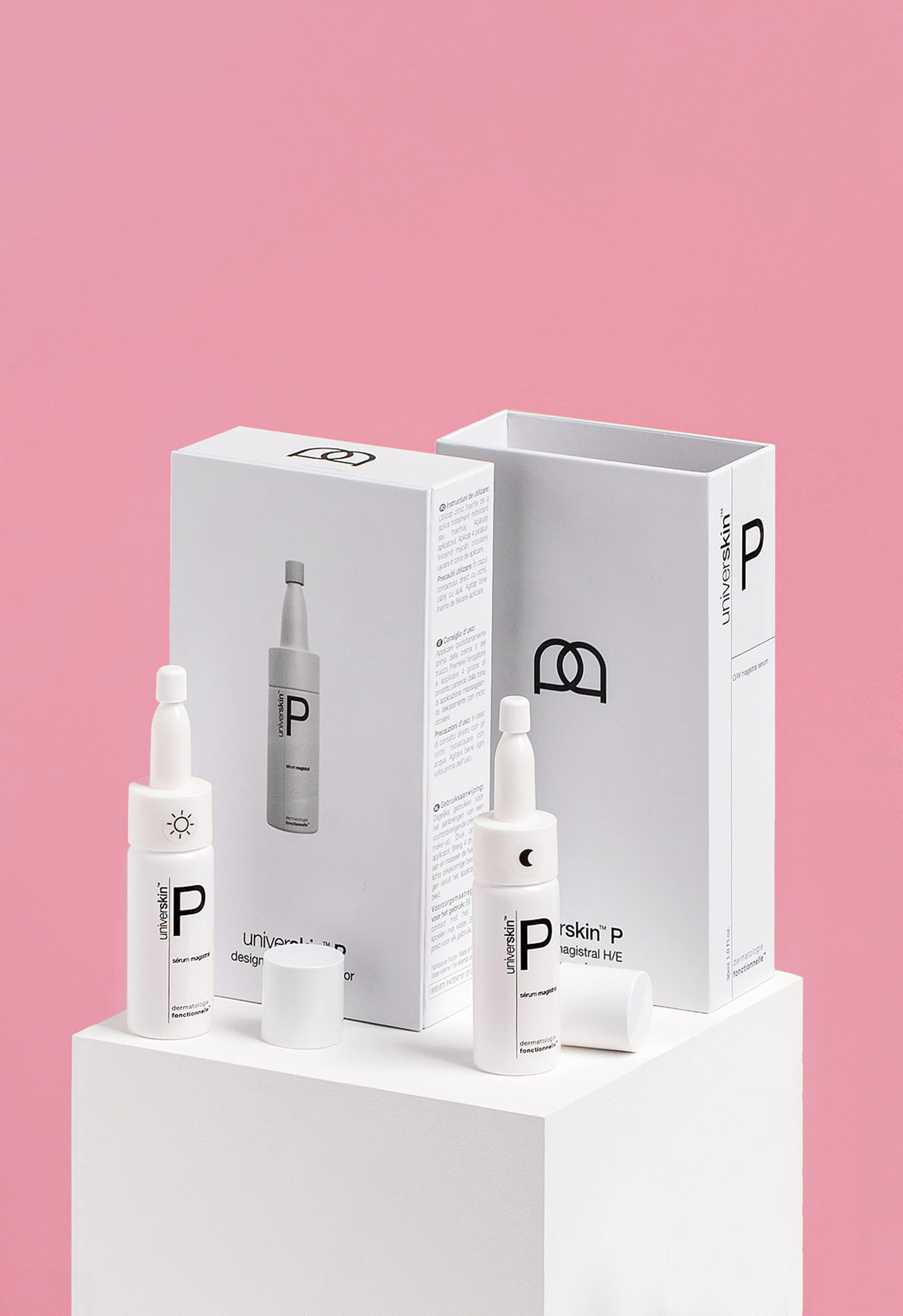
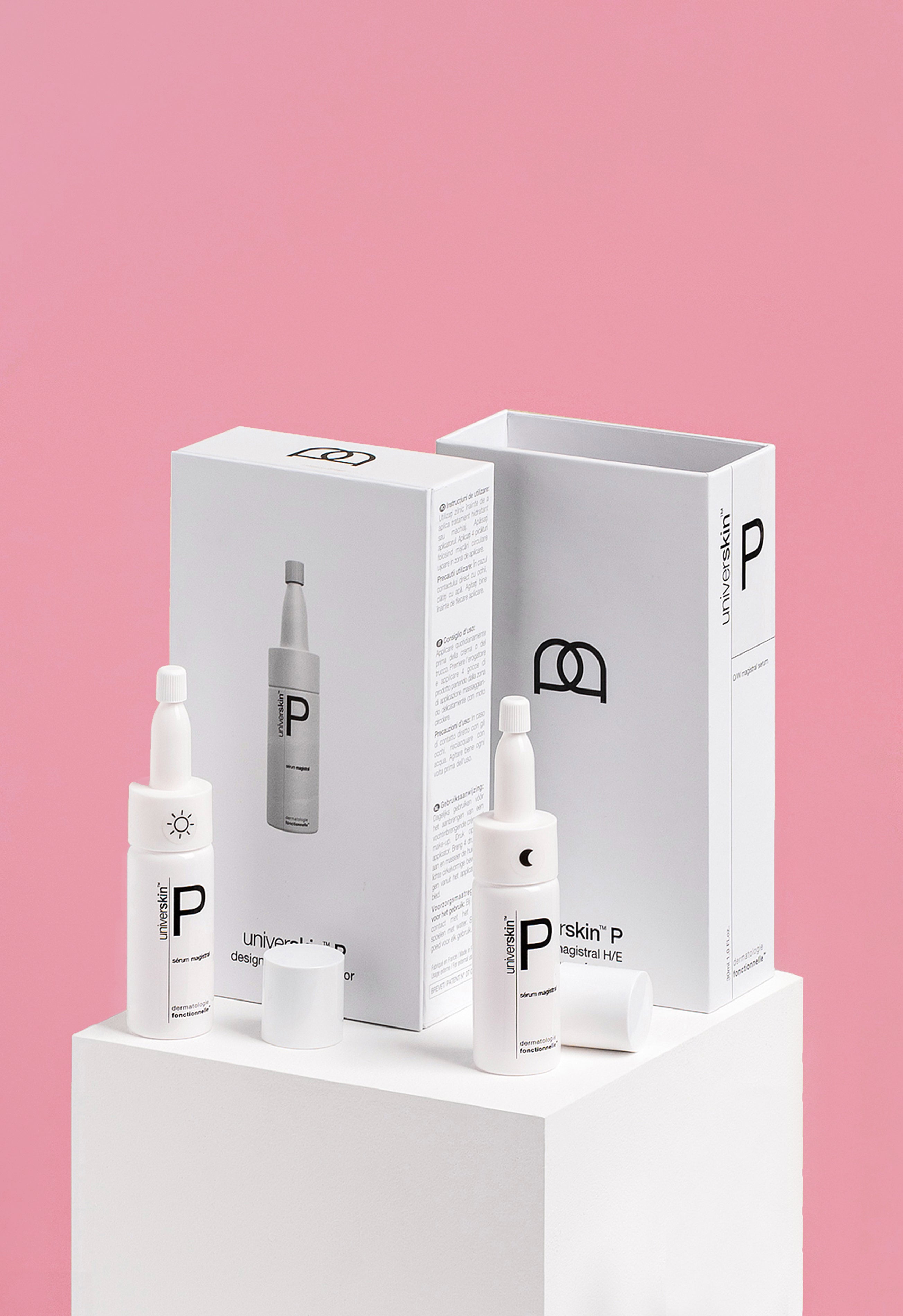
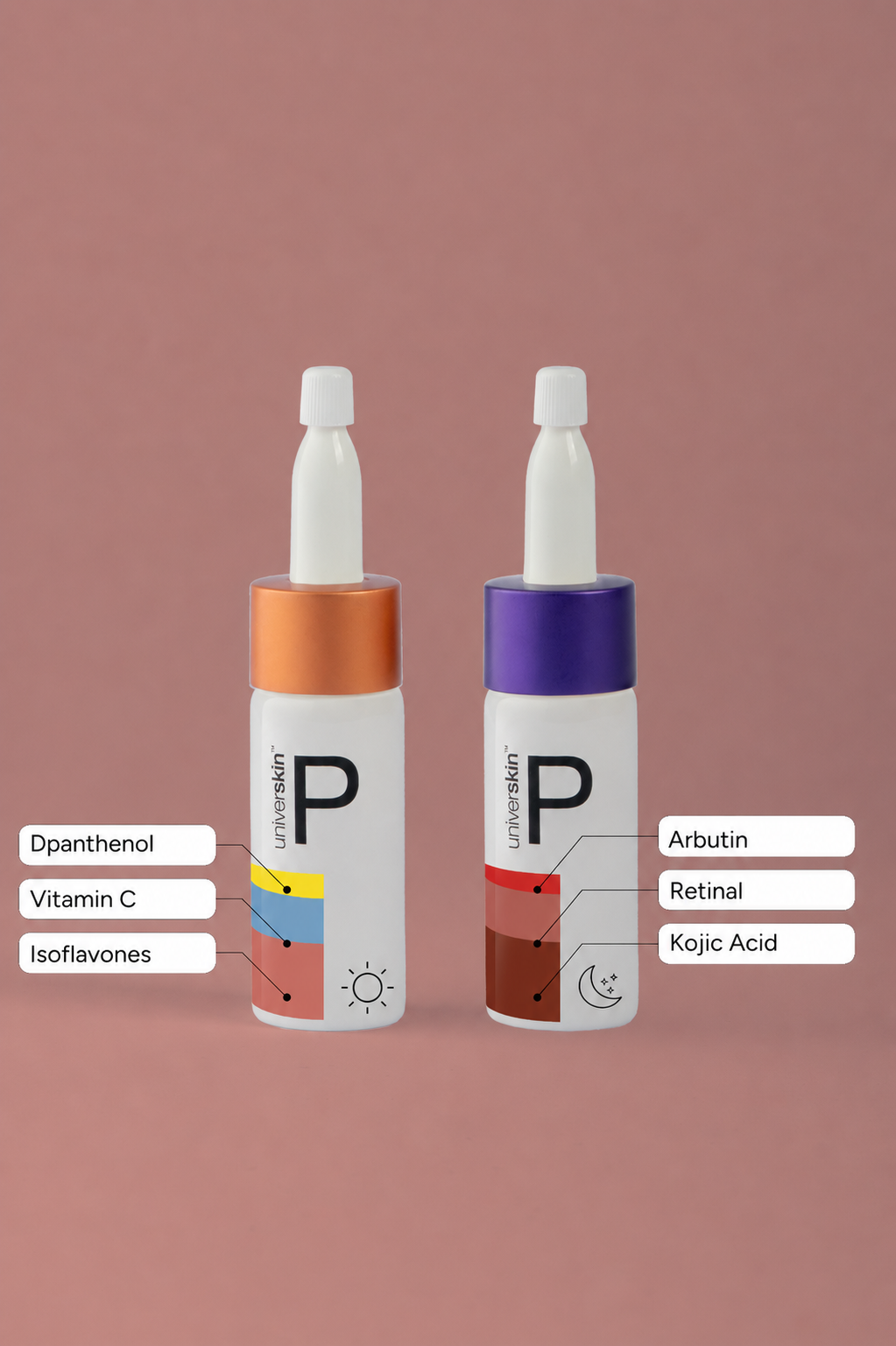
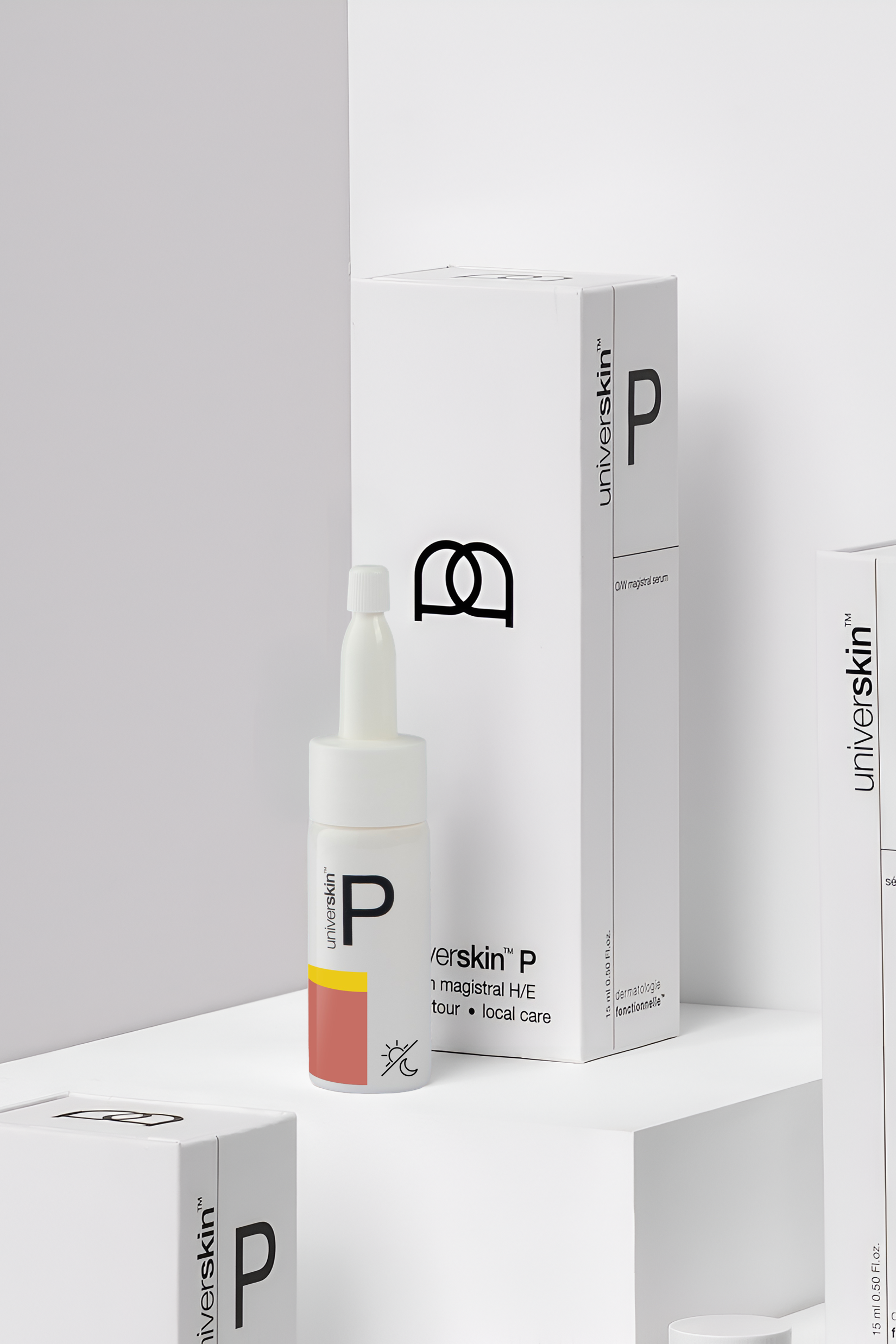
At Universkin, isoflavones are dosed as capsules your doctor adds to your personalized serum base, so the concentration is chosen for your skin rather than the average — not a fixed, off-the-shelf percentage. Isoflavones are a two-capsule active: each dose delivers 2%, and your doctor can build the formula up to 4% — two capsules — when firming and brightening are a priority. It can stay gentle for skin new to phytoestrogens, or step up to the full 4% for more established menopausal concerns. Your recommended dose follows from your skin analysis, which maps your priorities across firmness, tone, hydration and pigmentation before a single capsule is chosen.
Frequently Asked Questions
What do isoflavones do for your skin?
Isoflavones are plant-derived phytoestrogens that help firm, brighten and hydrate skin whose natural estrogen support has declined. By engaging estrogen receptors in the skin and working as antioxidants, they support collagen and elasticity, help even out tone and soften the look of age-related dark spots. They are best suited to mature and menopausal skin looking to restore firmness and radiance.
Are isoflavones safe to use on the skin during menopause?
For most people, yes — isoflavones are considered safe for topical use and are often chosen specifically to support menopausal skin. However, anyone with a history of a hormone-dependent cancer should avoid them, and they are not recommended during pregnancy or breastfeeding. Because they act as phytoestrogens, it is sensible to introduce them under a doctor’s guidance if you have any hormone-related condition.
Who should not use isoflavones in skincare?
Isoflavones should be avoided by anyone who is pregnant or breastfeeding and by anyone with a history of a hormone-dependent cancer, because they mimic estrogen. People with very sensitive or allergy-prone skin should patch test first and pause use if irritation appears. If you are unsure whether they suit your health history, check with your doctor before starting.
Can I combine isoflavones with vitamin C, niacinamide or retinol?
Yes. Isoflavones layer well with vitamin C and niacinamide, which complement their antioxidant and brightening effects, and they can be used alongside a retinoid such as retinol, typically in the evening. Introduce one active at a time so your skin can adjust, and always finish your morning routine with sunscreen, since brightening ingredients leave skin more sensitive to UV.
How long do soy isoflavones take to firm and brighten the skin?
Isoflavones work gradually. Antioxidant and hydrating benefits often appear within the first two to four weeks, while more even tone becomes visible around four to eight weeks. Firming, elasticity and the fading of age-related dark spots are the slowest to develop and are usually most noticeable after about 8 to 12 weeks of consistent daily use. Consistency matters more than strength.
In short, isoflavones are a valuable ally for mature and menopausal skin, offering firming, brightening and softer-looking fine lines and wrinkles. They are compatible with a wide range of other actives and well tolerated by most people.
It is always wise to check with a doctor or dermatologist before introducing a new active into your routine — especially if you have an existing skin condition, a hormone-related history, or are taking any medication.
Skin concerns this ingredient can help with
In a personalized formula, this active is commonly used to help target:
Featured collection
Isoflavones BASED SERUMS FORMULAS